Introduction
In mobile development with Flutter, a photo gallery must be responsive, memory-efficient, and tactile. Two techniques that dramatically improve perceived performance are predictive prefetching (loading images likely to be needed next) and smooth zoom gestures for inspection. This tutorial shows a pragmatic approach combining PageView-based navigation, targeted prefetching using precacheImage, and InteractiveViewer-driven zoom with a double-tap toggle.
Designing For Performance
Before writing code, decide how many images to prefetch and how to bound memory. Prefetching too many images wastes bandwidth and memory; too few yields janky transitions. A common strategy is a short lookahead window (1–3 items) and a small lookback window (1 item) so you only cache neighbors.
Use Flutter's imageCache to control cache size if necessary (imageCache.maximumSize, imageCache.maximumSizeBytes). Use low-resolution thumbnails in the main grid and load high-resolution images in the full-screen viewer. This reduces initial load times and keeps prefetch costs manageable.
Implementing Predictive Prefetch
Use a PageController for the full-screen viewer. Listen to page changes and call a lightweight prefetch function that calls precacheImage for the next/previous indexes based on scroll direction. Keep an in-memory Set to avoid duplicate prefetches and clear entries when images are evicted or when navigation jumps.
Example prefetch helper:
void prefetchSurrounding(BuildContext context, List<String> urls, int index) {
  final toPreload = [index + 1, index - 1]..retainWhere((i) => i >= 0 && i < urls.length);
  for (var i in toPreload) {
    final provider = NetworkImage(urls[i]);
    precacheImage(provider, context);
  }
}
Call this from PageView's onPageChanged or from a PageController listener. For more advanced prediction, observe scroll velocity to prefetch further ahead if the user is swiping quickly.
Building Zoom Gestures
Flutter's InteractiveViewer provides a solid zoom and pan foundation. Wrap the image in InteractiveViewer and use a TransformationController to programmatically animate zoom on double-tap.
A minimal double-tap toggle pattern:
final controller = TransformationController();
void handleDoubleTap(Offset localPos) {
final matrix = controller.value;
final zoomed = matrix.getMaxScaleOnAxis() > 1.0;
final end = zoomed ? Matrix4.identity() : Matrix4.identity()..translate(-localPos.dx, -localPos.dy)..scale(2.0);
controller.value = end;
}
For a smoother UX, animate between matrices using an AnimationController and Matrix4Tween. Limit maxScale and minScale on InteractiveViewer to prevent runaway scaling.
Putting It Together And Optimization
Architect the viewer as: a PageView.builder that provides pages containing a GestureDetector -> InteractiveViewer -> Image widget. On page changes, trigger prefetch of nearby indexes. Example concerns and mitigations:
Cancellation: precacheImage cannot be cancelled, so keep the lookahead small. Use thumbnails for the earlier stage to reduce cost.
Memory: adjust imageCache.maximumSizeBytes when the user opens heavy galleries, or clear the cache when leaving the viewer.
Smoothness: avoid heavy work on the UI thread while scrolling. Defer analytics or logging during fast swipes.
Network: consider HTTP/2 and CDNs to reduce latency; use progressive JPEGs or WebP for faster render.
Accessibility: ensure double-tap zooming doesn't interfere with TalkBack/VoiceOver. Provide a long-press context menu for actions like save/share to avoid forcing additional gestures.
Testing: simulate slow networks with the device simulator and test with large galleries to tune prefetch window and cache sizes.
Vibe Studio
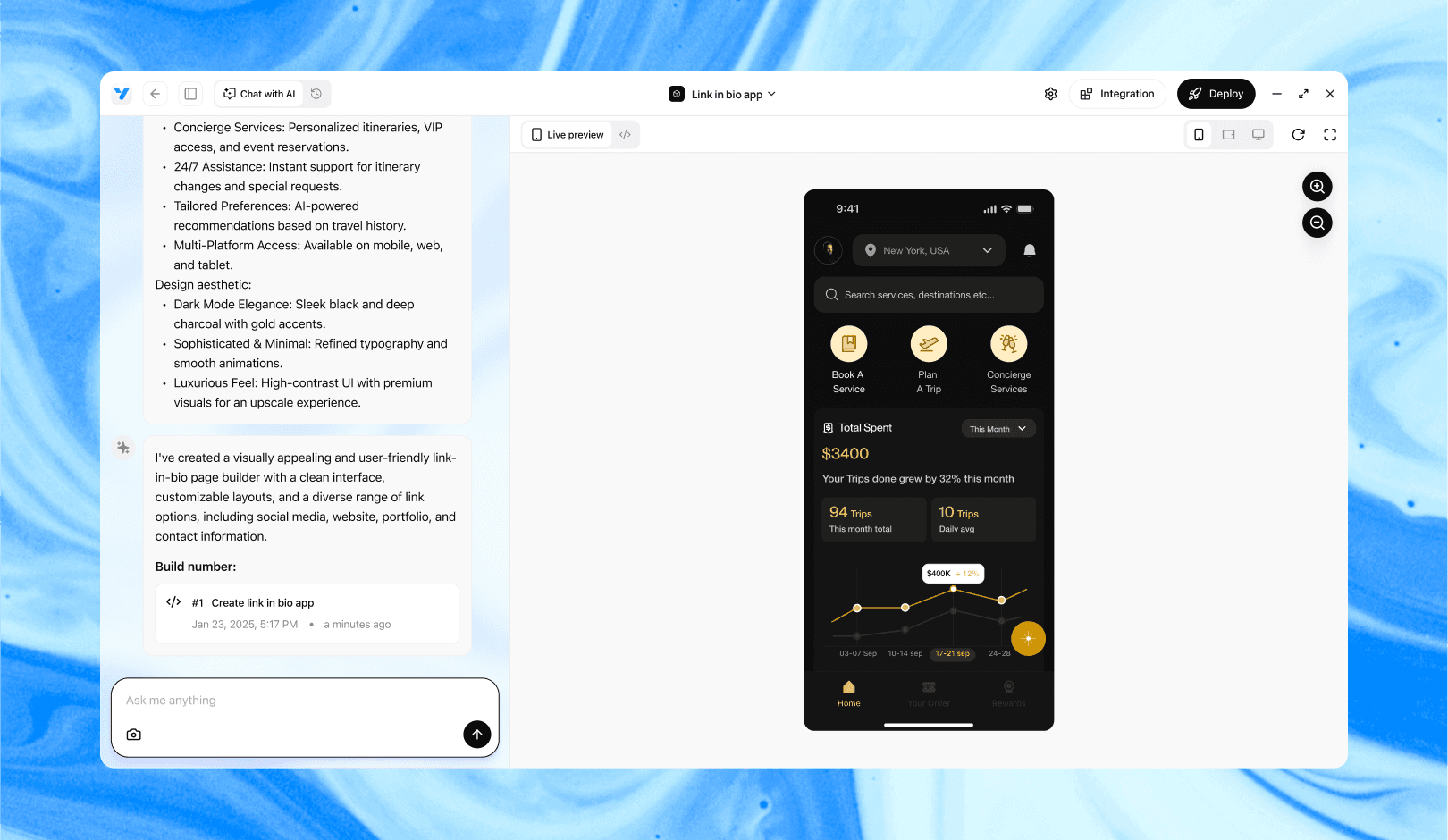
Vibe Studio, powered by Steve’s advanced AI agents, is a revolutionary no-code, conversational platform that empowers users to quickly and efficiently create full-stack Flutter applications integrated seamlessly with Firebase backend services. Ideal for solo founders, startups, and agile engineering teams, Vibe Studio allows users to visually manage and deploy Flutter apps, greatly accelerating the development process. The intuitive conversational interface simplifies complex development tasks, making app creation accessible even for non-coders.
Conclusion
Combining predictive prefetching with responsive zoom gestures yields a snappy gallery experience in Flutter. Use a small, adaptive prefetch window driven by PageController events and tune image cache limits. For zooming, rely on InteractiveViewer plus a TransformationController for double-tap animations. These patterns keep the UI fluid, reduce perceived load times, and provide an intuitive inspection experience on mobile devices.