Introduction
Building a multi-window desktop experience with Flutter lets you move beyond the single-window model common in mobile development and deliver productivity-class apps for Windows, macOS, and Linux. This tutorial walks through the architectural choices, practical APIs, and UX considerations to open and manage multiple windows, share state, and keep responsiveness high. Expect code-forward examples and concrete recommendations for desktop-first Flutter engineers who already know mobile development patterns.
Why Multi-Window Matters
Desktop users expect detachable panels, multiple document interfaces, and simultaneous views. Mobile development patterns—single activity/view stacks and modal navigation—don't map one-to-one to desktop. Multi-window support lets users run two documents side-by-side, keep tools visible while editing, and offload long-running tasks into their own windows. Architecturally, you should treat windows as first-class controllers with independent lifecycles and optional shared state.
Creating Secondary Windows
On Flutter desktop, you can use platform plugins such as desktop_multi_window or platform channels to spawn additional native windows that host a Flutter engine. The typical approach is:
Start the main app as usual.
Call a window-creation API with an entrypoint or route name.
Receive a window id or handle and use that to route messages or lifecycle events.
Example using a popular community package pattern:
import 'package:desktop_multi_window/desktop_multi_window.dart';

void openToolWindow() async {
  final args = {'route': '/tool', 'title': 'Tool'};
  await DesktopMultiWindow.createWindow(args);
}
Each new window can register its own root widget or interpret the provided route. Use distinct entrypoints when you need different initializations (for example, a background engine vs. an interactive editor).
Sharing State Between Windows
There are three pragmatic patterns to share state between windows:
Shared Platform Channel: Use MethodChannel/EventChannel to exchange messages via the hosting platform. This is straightforward and familiar if you've used platform channels in mobile development.
Shared Native Storage: Persist shared data to a local database (SQLite), file, or in-memory native layer. Windows read/update that source and listen for changes.
IPC / Message Bus: Use a lightweight message bus implemented on the native side or via isolates with ports if the package supports it.
A simple MethodChannel sketch for broadcasting events:
final MethodChannel windowChannel = MethodChannel('app/window_channel');

void broadcastSelection(String id) {
  windowChannel.invokeMethod('broadcastSelection', {'id': id});
}
On the native plugin side or a central process, dispatch that message to other windows. Prefer immutable event payloads and versioned message types to avoid tight coupling.
Window Lifecycle And Routing
Treat each window as a mini-app with its own Navigator stack. Use a RouterDelegate per window if you need deep linking. Handle lifecycle events (focus, minimize, close) explicitly:
Save transient UI state on blur or before close.
Use hotstate storage for unsaved documents (local DB or temporary files).
Confirm destructive actions on window close like you would on mobile but adapt to desktop expectations (do not always block closing without a clear UX reason).
If using a package that exposes window ids, include the id in logs and persisted state to reconstruct multi-window sessions after restart.
UX And Platform Considerations
Desktop UX differs from mobile development norms: windows are freely resizable and users expect persistent layouts across sessions. Design for:
Resizable layouts with responsive constraints rather than fixed mobile breakpoints.
Keyboard shortcuts and menu integration for window operations (open, close, focus). Map common platform shortcuts so power users transfer muscle memory from other desktop apps.
Accessibility (focus order, keyboard navigation) at the window level.
Test on each platform: window decorations, taskbar behaviors, and native dialogs vary across Windows, macOS, and Linux.
Performance And Debugging
Multiple windows mean multiple Flutter engines and more memory. Mitigate costs by:
Lazily creating windows and disposing them when idle.
Sharing read-only assets from a central source rather than duplicating large in-memory structures.
Profiling each window separately in DevTools.
For debugging, log window ids and include startup arguments in crash reports to simplify reproducing multi-window bugs.
Vibe Studio
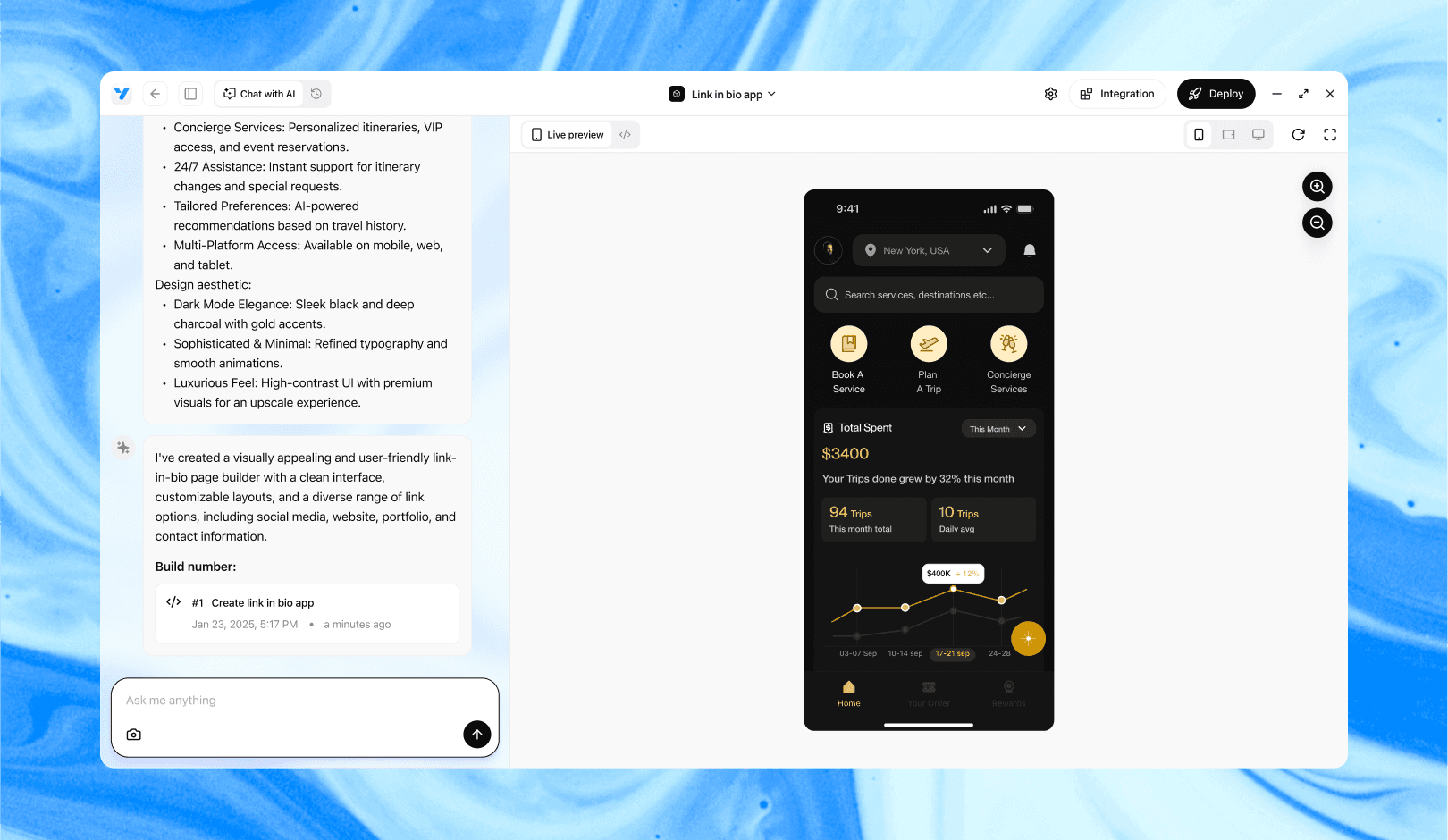
Vibe Studio, powered by Steve’s advanced AI agents, is a revolutionary no-code, conversational platform that empowers users to quickly and efficiently create full-stack Flutter applications integrated seamlessly with Firebase backend services. Ideal for solo founders, startups, and agile engineering teams, Vibe Studio allows users to visually manage and deploy Flutter apps, greatly accelerating the development process. The intuitive conversational interface simplifies complex development tasks, making app creation accessible even for non-coders.
Conclusion
Building a multi-window desktop experience in Flutter requires shifting some assumptions from mobile development: treat windows as independent controllers, pick a robust IPC or storage strategy for shared state, and design responsive UX for resizable screens and keyboard-driven workflows. Use existing community plugins to create windows quickly, but plan for lifecycle, performance, and platform-specific behavior. With careful architecture, multi-window Flutter apps deliver powerful desktop-grade productivity features while reusing much of your mobile development expertise.