Building a Modular Flutter Architecture Using Feature Layers
Summary
Summary
Summary
Summary

Build modular Flutter apps by grouping UI, domain, and data into feature layers. Each feature exposes a small public API (route factories, DI registration). Use a single DI approach, keep clear boundaries, and test features in isolation to increase team velocity and safe releases.

Build modular Flutter apps by grouping UI, domain, and data into feature layers. Each feature exposes a small public API (route factories, DI registration). Use a single DI approach, keep clear boundaries, and test features in isolation to increase team velocity and safe releases.

Build modular Flutter apps by grouping UI, domain, and data into feature layers. Each feature exposes a small public API (route factories, DI registration). Use a single DI approach, keep clear boundaries, and test features in isolation to increase team velocity and safe releases.

Build modular Flutter apps by grouping UI, domain, and data into feature layers. Each feature exposes a small public API (route factories, DI registration). Use a single DI approach, keep clear boundaries, and test features in isolation to increase team velocity and safe releases.

Key insights:
Key insights:
Key insights:
Key insights:
  • Layered Feature Structure: Group UI, domain, and data into a single feature folder and expose only a small public API for composition.

  • Defining Clear Boundaries: Enforce import and dependency rules so features interact only via explicit APIs (routes and registrars).

  • Dependency Management And DI: Use a single DI approach and composition root to register feature-level bindings and enable easy test substitution.

  • Testing And Release: Write unit/widget tests against feature APIs, run feature-level CI, and use feature flags for progressive delivery.

  • Feature Composition: The app shell should compose features, register global services, and remain the single place for side effects and startup logic.

Introduction

Modularity reduces complexity in non-trivial Flutter apps. Building a modular Flutter architecture using feature layers organizes code by vertical slices (features) rather than technical concerns. Each feature encapsulates UI, state, domain rules, and data access, making teams independent, tests smaller, and releases safer. This article shows a practical feature-layer pattern, folder conventions, dependency rules, and how to test and release features incrementally.

Layered Feature Structure

A feature layer groups all artifacts required to implement one user-facing capability: UI widgets, page routes, state (bloc/cubit/provider), use cases, and data sources. Use a consistent directory layout so developers can find code quickly:

  • features//presentation

  • features//domain

  • features//data

  • features//feature.dart (public API)

Keep a lightweight app shell that composes features and registers global services (analytics, logging, storage). Each feature exposes a small public API through its feature.dart that provides route factories and dependency bindings. Example feature export:

// features/cart/feature.dart
import 'package:get_it/get_it.dart';
import 'presentation/cart_page.dart';

void registerCart(GetIt di) {
  di.registerLazySingleton(() => CartRepository());
}

Route<dynamic> cartRoute() => MaterialPageRoute(builder: (_) => CartPage());

Conventions: only the feature.dart file is imported by other features or the app shell. Internal files remain private to the feature.

Defining Clear Boundaries

Establish strict dependency rules: features depend on core/common packages and on abstractions (interfaces) but not on other feature internals. Dependencies flow inward toward domain logic and outward via small, explicit adapters. Use domain models and DTOs to convert between layers.

Design public APIs around two things: navigation and dependency registration. Navigation APIs return route objects or route builders; registration APIs accept a DI container to register factories and singletons. Keep side effects confined to the app shell (app-wide initializations) and feature registrars should only bind their local dependencies.

Example boundary rules:

  • UI -> Domain: allowed (UI calls use cases)

  • Domain -> UI: not allowed

  • Feature A -> Feature B: only through Feature B's public API

Enforce these rules with code reviews and, when possible, analyzer/lint rules and import path conventions.

Dependency Management And DI

A consistent DI strategy is critical. Choose a single DI mechanism (GetIt, Provider, Riverpod) and use it across the app. Prefer composition root(s): the app shell registers global services and iterates over features, calling each feature's registration method. Features should register factories and abstractions rather than concrete implementations when other features need to replace them in tests.

Pattern benefits:

  • Lazy singletons reduce startup cost

  • Scoping per feature limits accidental global state

  • Swappable implementations simplify testing and offline modes

Example using GetIt:

final di = GetIt.instance;

void registerAllFeatures() {
  registerCart(di);
  registerAuth(di);
  // app-level
  di.registerLazySingleton(() => AnalyticsService());
}

If using Riverpod, expose Providers from the feature and compose them in the app shell. Keep provider scopes local where possible.

Testing And Release

Feature layers simplify testing: unit tests target use cases and repositories, widget tests focus on the presentation subfolder, and integration tests exercise composed features via the app shell. Because features declare their dependencies via DI, tests can swap implementations easily.

Testing tips:

  • Write tests against feature public APIs, not internal files

  • Provide fake implementations of remote data sources and repositories when running widget tests

  • Use small, focused integration tests that compose only the features required for the scenario

For release and CI, run feature-level pipelines: lint and unit tests on feature branches, run integration tests in a staging job, and gate higher-level deploys on those results. Feature flags help ship incomplete features behind toggles.

Vibe Studio
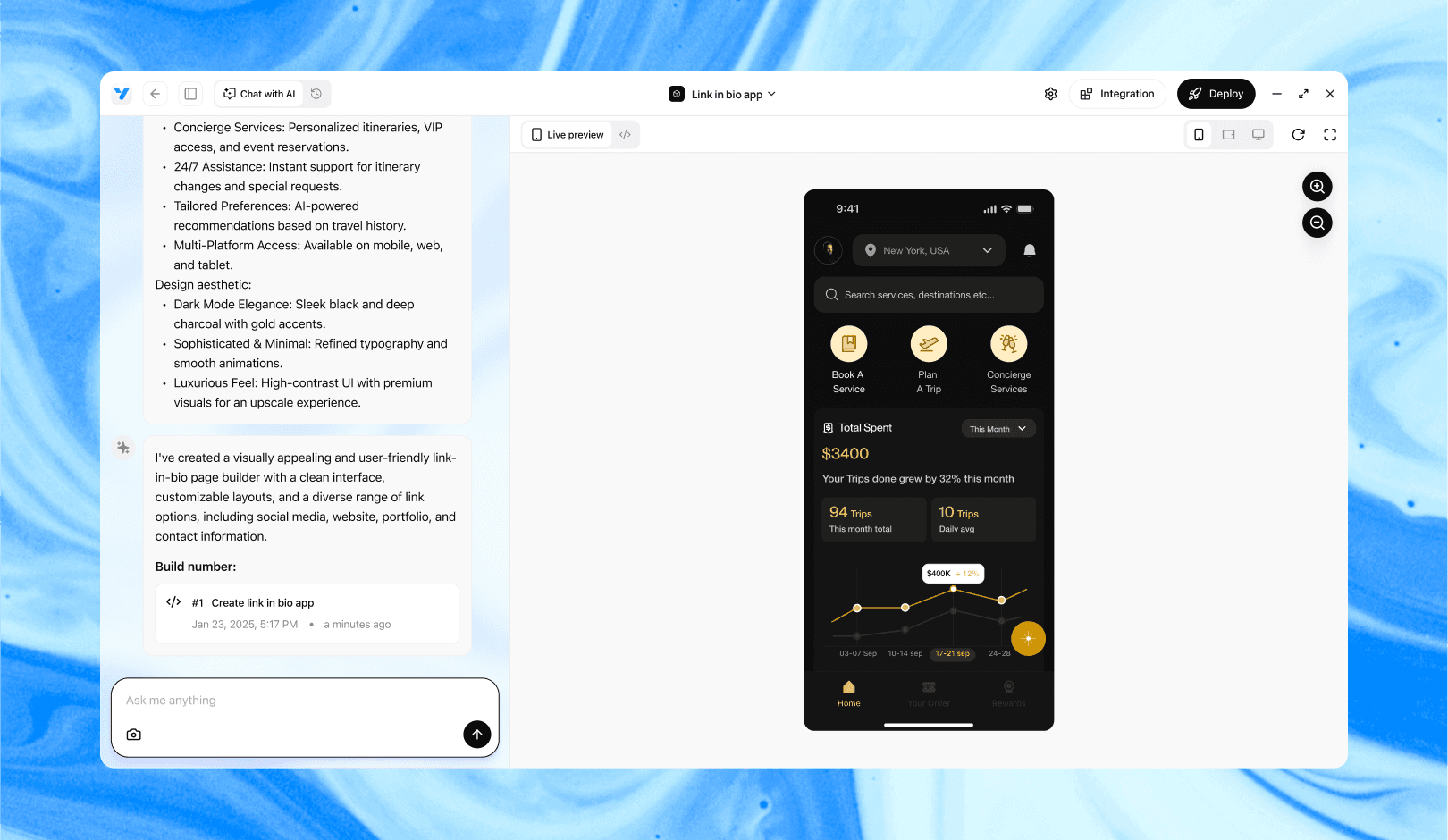
Vibe Studio, powered by Steve’s advanced AI agents, is a revolutionary no-code, conversational platform that empowers users to quickly and efficiently create full-stack Flutter applications integrated seamlessly with Firebase backend services. Ideal for solo founders, startups, and agile engineering teams, Vibe Studio allows users to visually manage and deploy Flutter apps, greatly accelerating the development process. The intuitive conversational interface simplifies complex development tasks, making app creation accessible even for non-coders.

Conclusion

A feature-layered modular architecture in Flutter organizes code by vertical slices, enforcing clear boundaries and a single DI strategy. It scales team velocity, simplifies testing, and reduces coupling. Implement a small public API per feature (route builders and DI registration), keep internals private, and use composition in the app shell to assemble the app. With these patterns you get predictable refactors, safer releases, and faster on-boarding for new developers.


Introduction

Modularity reduces complexity in non-trivial Flutter apps. Building a modular Flutter architecture using feature layers organizes code by vertical slices (features) rather than technical concerns. Each feature encapsulates UI, state, domain rules, and data access, making teams independent, tests smaller, and releases safer. This article shows a practical feature-layer pattern, folder conventions, dependency rules, and how to test and release features incrementally.

Layered Feature Structure

A feature layer groups all artifacts required to implement one user-facing capability: UI widgets, page routes, state (bloc/cubit/provider), use cases, and data sources. Use a consistent directory layout so developers can find code quickly:

  • features//presentation

  • features//domain

  • features//data

  • features//feature.dart (public API)

Keep a lightweight app shell that composes features and registers global services (analytics, logging, storage). Each feature exposes a small public API through its feature.dart that provides route factories and dependency bindings. Example feature export:

// features/cart/feature.dart
import 'package:get_it/get_it.dart';
import 'presentation/cart_page.dart';

void registerCart(GetIt di) {
  di.registerLazySingleton(() => CartRepository());
}

Route<dynamic> cartRoute() => MaterialPageRoute(builder: (_) => CartPage());

Conventions: only the feature.dart file is imported by other features or the app shell. Internal files remain private to the feature.

Defining Clear Boundaries

Establish strict dependency rules: features depend on core/common packages and on abstractions (interfaces) but not on other feature internals. Dependencies flow inward toward domain logic and outward via small, explicit adapters. Use domain models and DTOs to convert between layers.

Design public APIs around two things: navigation and dependency registration. Navigation APIs return route objects or route builders; registration APIs accept a DI container to register factories and singletons. Keep side effects confined to the app shell (app-wide initializations) and feature registrars should only bind their local dependencies.

Example boundary rules:

  • UI -> Domain: allowed (UI calls use cases)

  • Domain -> UI: not allowed

  • Feature A -> Feature B: only through Feature B's public API

Enforce these rules with code reviews and, when possible, analyzer/lint rules and import path conventions.

Dependency Management And DI

A consistent DI strategy is critical. Choose a single DI mechanism (GetIt, Provider, Riverpod) and use it across the app. Prefer composition root(s): the app shell registers global services and iterates over features, calling each feature's registration method. Features should register factories and abstractions rather than concrete implementations when other features need to replace them in tests.

Pattern benefits:

  • Lazy singletons reduce startup cost

  • Scoping per feature limits accidental global state

  • Swappable implementations simplify testing and offline modes

Example using GetIt:

final di = GetIt.instance;

void registerAllFeatures() {
  registerCart(di);
  registerAuth(di);
  // app-level
  di.registerLazySingleton(() => AnalyticsService());
}

If using Riverpod, expose Providers from the feature and compose them in the app shell. Keep provider scopes local where possible.

Testing And Release

Feature layers simplify testing: unit tests target use cases and repositories, widget tests focus on the presentation subfolder, and integration tests exercise composed features via the app shell. Because features declare their dependencies via DI, tests can swap implementations easily.

Testing tips:

  • Write tests against feature public APIs, not internal files

  • Provide fake implementations of remote data sources and repositories when running widget tests

  • Use small, focused integration tests that compose only the features required for the scenario

For release and CI, run feature-level pipelines: lint and unit tests on feature branches, run integration tests in a staging job, and gate higher-level deploys on those results. Feature flags help ship incomplete features behind toggles.

Vibe Studio

Vibe Studio, powered by Steve’s advanced AI agents, is a revolutionary no-code, conversational platform that empowers users to quickly and efficiently create full-stack Flutter applications integrated seamlessly with Firebase backend services. Ideal for solo founders, startups, and agile engineering teams, Vibe Studio allows users to visually manage and deploy Flutter apps, greatly accelerating the development process. The intuitive conversational interface simplifies complex development tasks, making app creation accessible even for non-coders.

Conclusion

A feature-layered modular architecture in Flutter organizes code by vertical slices, enforcing clear boundaries and a single DI strategy. It scales team velocity, simplifies testing, and reduces coupling. Implement a small public API per feature (route builders and DI registration), keep internals private, and use composition in the app shell to assemble the app. With these patterns you get predictable refactors, safer releases, and faster on-boarding for new developers.

Build Flutter Apps Faster with Vibe Studio

Vibe Studio is your AI-powered Flutter development companion. Skip boilerplate, build in real-time, and deploy without hassle. Start creating apps at lightning speed with zero setup.

Other Insights

Join a growing community of builders today

Join a growing community of builders today

Join a growing community of builders today

Join a growing community of builders today

Join a growing community of builders today

28-07 Jackson Ave

Walturn

New York NY 11101 United States

© Steve • All Rights Reserved 2025

28-07 Jackson Ave

Walturn

New York NY 11101 United States

© Steve • All Rights Reserved 2025

28-07 Jackson Ave

Walturn

New York NY 11101 United States

© Steve • All Rights Reserved 2025

28-07 Jackson Ave

Walturn

New York NY 11101 United States

© Steve • All Rights Reserved 2025

28-07 Jackson Ave

Walturn

New York NY 11101 United States

© Steve • All Rights Reserved 2025

28-07 Jackson Ave

Walturn

New York NY 11101 United States

© Steve • All Rights Reserved 2025