Building A Flutter App With Supabase Auth And Row Level Security
Summary
Summary
Summary
Summary

This tutorial shows how to set up Supabase Auth and Row Level Security for a Flutter mobile development app. It covers Supabase project setup, writing RLS policies using auth.uid(), initializing supabase_flutter in Flutter, recommended client patterns, testing, and security best practices to ensure per-user data isolation.

This tutorial shows how to set up Supabase Auth and Row Level Security for a Flutter mobile development app. It covers Supabase project setup, writing RLS policies using auth.uid(), initializing supabase_flutter in Flutter, recommended client patterns, testing, and security best practices to ensure per-user data isolation.

This tutorial shows how to set up Supabase Auth and Row Level Security for a Flutter mobile development app. It covers Supabase project setup, writing RLS policies using auth.uid(), initializing supabase_flutter in Flutter, recommended client patterns, testing, and security best practices to ensure per-user data isolation.

This tutorial shows how to set up Supabase Auth and Row Level Security for a Flutter mobile development app. It covers Supabase project setup, writing RLS policies using auth.uid(), initializing supabase_flutter in Flutter, recommended client patterns, testing, and security best practices to ensure per-user data isolation.

Key insights:
Key insights:
Key insights:
Key insights:
  • Preparing Your Supabase Project: Create tables with an owner column and enable RLS to enforce per-user access from the database side.

  • Designing Row Level Security Policies: Use auth.uid() in SELECT/INSERT/UPDATE policies and avoid exposing service_role keys to the client.

  • Integrating Supabase Auth In Flutter: Initialize supabase_flutter, sign in users, and rely on the stored JWT for authenticated queries.

  • Practical Examples And Best Practices: Test with multiple users, keep policies simple for performance, and use backend service roles only for trusted jobs.

  • Security Checklist: Turn on RLS for all user data, rotate keys, and combine RLS with explicit columns for teams or public visibility.

Introduction

This tutorial walks through building a Flutter mobile development app that uses Supabase Auth together with Row Level Security (RLS) to protect data per-user. You will see how to set up Supabase, create RLS policies that enforce per-user access, and wire the client in Flutter to authenticate and operate securely. The goal is a pragmatic, code-forward guide to get a minimal but production-ready auth + RLS flow.

Preparing Your Supabase Project

Start by creating a project at app.supabase.io and enable Auth providers (email/password, OAuth) you need. In the SQL editor create a table that will hold user-owned records. Example table columns: id (uuid), owner (uuid), data (jsonb), created_at (timestamp).

Enable Row Level Security for the table:

  • In the Table Editor, toggle RLS on for the table.

  • Add policies that limit read/write to the record owner. Policies use the JWT claims exposed by Supabase Auth: auth.uid() returns the current user id.

Example policy logic (SQL, conceptual):

  • FOR SELECT USING (owner = auth.uid())

  • FOR INSERT WITH CHECK (owner = auth.uid())

  • FOR UPDATE USING (owner = auth.uid()) AND WITH CHECK (owner = auth.uid())

This ensures any client with a valid JWT can only see and modify rows where owner equals the authenticated user's id.

Designing Row Level Security Policies

RLS shifts authorization from the client to the database. Design policies with minimal privilege and explicit checks. Use the following practices:

  • Use auth.uid() for per-row ownership checks.

  • Avoid embedding sensitive logic in client code; rely on policies for enforcement.

  • Provide service roles for server-side processes; never expose service_role keys to the client.

  • If you need shared resources, add explicit columns (is_public boolean, team_id) and write policies that combine auth.uid() with membership queries.

Test policies using the SQL editor's "API Test" with different JWTs (you can emulate by passing an Authorization header) or use supabase-js to sign in and fetch rows to ensure the policies behave as intended.

Integrating Supabase Auth In Flutter

Use the supabase_flutter package to initialize the client and handle auth. Initialize Supabase in main() with your anon key and URL (keep these in secure environment configs for mobile). Listen to auth state changes to keep UI and token state in sync.

Example initialization and signin flow in Flutter:

import 'package:supabase_flutter/supabase_flutter.dart';

await Supabase.initialize(
  url: 'https://your-project.supabase.co',
  anonKey: 'PUBLIC_ANON_KEY',
);
final client = Supabase.instance.client;

// Sign in with email
final res = await client.auth.signInWithPassword(
  email: 'user@example.com', password: 'password',
);

After successful sign-in, Supabase stores the session and attaches the JWT to subsequent requests. When you perform queries against the table with RLS enabled, the server will evaluate the policies against that JWT.

Fetch user-owned rows in Flutter (short example):

final userId = Supabase.instance.client.auth.currentUser!.id;
final rows = await Supabase.instance.client
  .from('items')
  .select()
  .eq('owner', userId)
  .execute();

Note: In many cases you can omit the .eq('owner', userId) on the client because RLS will already restrict results to rows where owner = auth.uid(). Adding the .eq filter can reduce payloads and match UI expectations.

Practical Examples And Best Practices

Session Persistence: Supabase stores the session in secure storage for mobile. Ensure you handle token refresh events and sign-out flows. Use SupabaseAuthState to drive navigation.

Handling Edge Cases: When you want background work to access multiple users' data (e.g., server-side jobs), use a server-side service_role key within a secure environment. Service_role bypasses RLS—so use it only in trusted backend code and implement additional checks there.

Testing: Write integration tests that sign in multiple test accounts and validate that each can only access its own records. This guards against policy regressions.

Security Checklist:

  • Turn RLS on for all user-owned tables.

  • Use auth.uid() in policies.

  • Rotate keys and keep service_role off the client.

  • Limit row visibility using additional columns for teams or public flags.

Performance: Keep policies simple and avoid expensive joins in policy expressions tested per row. If you need complex membership checks, consider caching membership in columns or materialized views to reduce runtime cost.

Vibe Studio
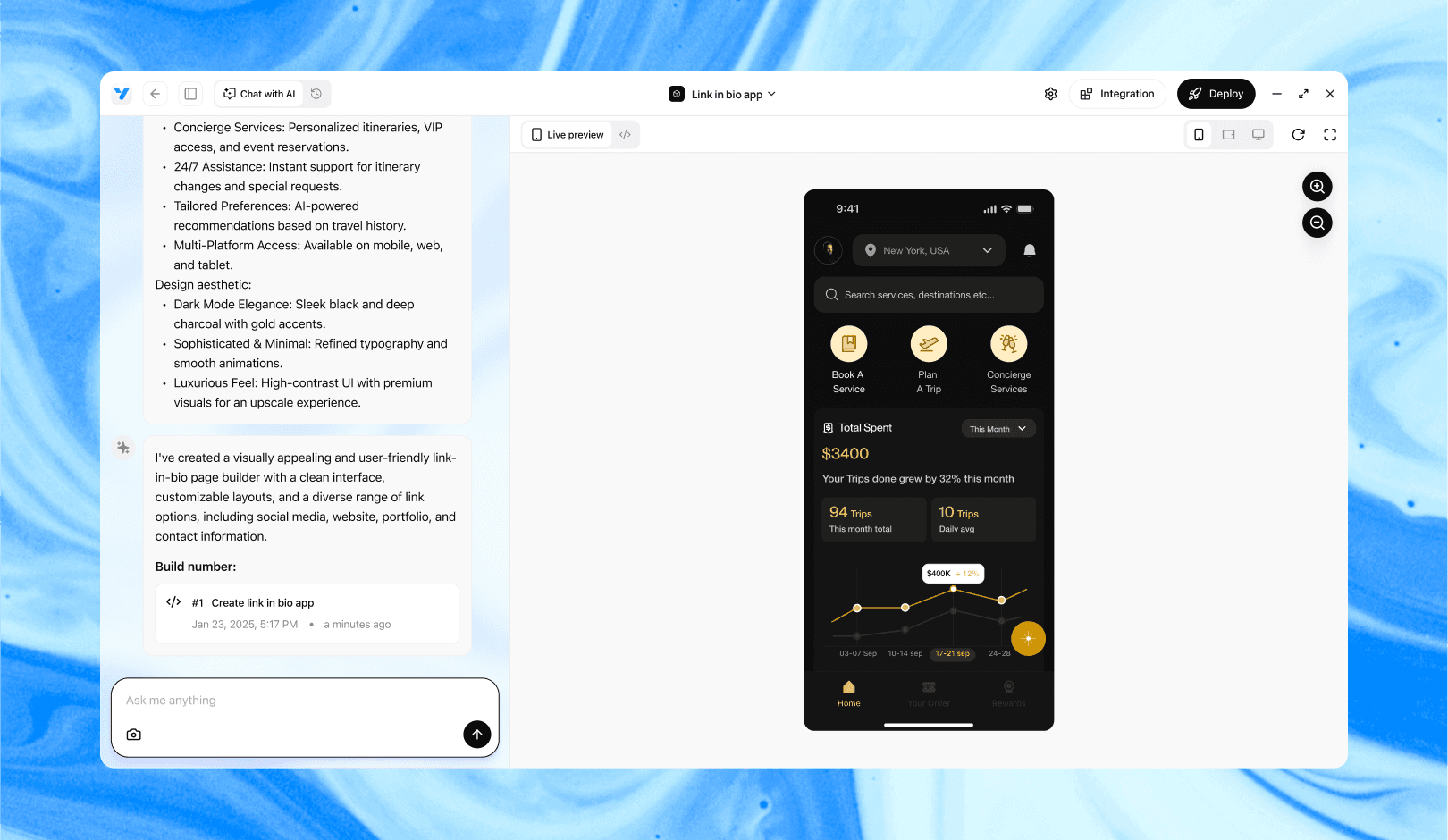
Vibe Studio, powered by Steve’s advanced AI agents, is a revolutionary no-code, conversational platform that empowers users to quickly and efficiently create full-stack Flutter applications integrated seamlessly with Firebase backend services. Ideal for solo founders, startups, and agile engineering teams, Vibe Studio allows users to visually manage and deploy Flutter apps, greatly accelerating the development process. The intuitive conversational interface simplifies complex development tasks, making app creation accessible even for non-coders.

Conclusion

Combining Supabase Auth with Row Level Security gives Flutter apps a secure, low-friction authorization model where the database is the source of truth for access control. Initialize Supabase in your Flutter app, enable RLS on relevant tables, craft precise policies using auth.uid(), and keep service_role keys on the backend only. This pattern scales for single-user, team-based, and mixed visibility scenarios while keeping auth and data protection centralized and consistent.


Introduction

This tutorial walks through building a Flutter mobile development app that uses Supabase Auth together with Row Level Security (RLS) to protect data per-user. You will see how to set up Supabase, create RLS policies that enforce per-user access, and wire the client in Flutter to authenticate and operate securely. The goal is a pragmatic, code-forward guide to get a minimal but production-ready auth + RLS flow.

Preparing Your Supabase Project

Start by creating a project at app.supabase.io and enable Auth providers (email/password, OAuth) you need. In the SQL editor create a table that will hold user-owned records. Example table columns: id (uuid), owner (uuid), data (jsonb), created_at (timestamp).

Enable Row Level Security for the table:

  • In the Table Editor, toggle RLS on for the table.

  • Add policies that limit read/write to the record owner. Policies use the JWT claims exposed by Supabase Auth: auth.uid() returns the current user id.

Example policy logic (SQL, conceptual):

  • FOR SELECT USING (owner = auth.uid())

  • FOR INSERT WITH CHECK (owner = auth.uid())

  • FOR UPDATE USING (owner = auth.uid()) AND WITH CHECK (owner = auth.uid())

This ensures any client with a valid JWT can only see and modify rows where owner equals the authenticated user's id.

Designing Row Level Security Policies

RLS shifts authorization from the client to the database. Design policies with minimal privilege and explicit checks. Use the following practices:

  • Use auth.uid() for per-row ownership checks.

  • Avoid embedding sensitive logic in client code; rely on policies for enforcement.

  • Provide service roles for server-side processes; never expose service_role keys to the client.

  • If you need shared resources, add explicit columns (is_public boolean, team_id) and write policies that combine auth.uid() with membership queries.

Test policies using the SQL editor's "API Test" with different JWTs (you can emulate by passing an Authorization header) or use supabase-js to sign in and fetch rows to ensure the policies behave as intended.

Integrating Supabase Auth In Flutter

Use the supabase_flutter package to initialize the client and handle auth. Initialize Supabase in main() with your anon key and URL (keep these in secure environment configs for mobile). Listen to auth state changes to keep UI and token state in sync.

Example initialization and signin flow in Flutter:

import 'package:supabase_flutter/supabase_flutter.dart';

await Supabase.initialize(
  url: 'https://your-project.supabase.co',
  anonKey: 'PUBLIC_ANON_KEY',
);
final client = Supabase.instance.client;

// Sign in with email
final res = await client.auth.signInWithPassword(
  email: 'user@example.com', password: 'password',
);

After successful sign-in, Supabase stores the session and attaches the JWT to subsequent requests. When you perform queries against the table with RLS enabled, the server will evaluate the policies against that JWT.

Fetch user-owned rows in Flutter (short example):

final userId = Supabase.instance.client.auth.currentUser!.id;
final rows = await Supabase.instance.client
  .from('items')
  .select()
  .eq('owner', userId)
  .execute();

Note: In many cases you can omit the .eq('owner', userId) on the client because RLS will already restrict results to rows where owner = auth.uid(). Adding the .eq filter can reduce payloads and match UI expectations.

Practical Examples And Best Practices

Session Persistence: Supabase stores the session in secure storage for mobile. Ensure you handle token refresh events and sign-out flows. Use SupabaseAuthState to drive navigation.

Handling Edge Cases: When you want background work to access multiple users' data (e.g., server-side jobs), use a server-side service_role key within a secure environment. Service_role bypasses RLS—so use it only in trusted backend code and implement additional checks there.

Testing: Write integration tests that sign in multiple test accounts and validate that each can only access its own records. This guards against policy regressions.

Security Checklist:

  • Turn RLS on for all user-owned tables.

  • Use auth.uid() in policies.

  • Rotate keys and keep service_role off the client.

  • Limit row visibility using additional columns for teams or public flags.

Performance: Keep policies simple and avoid expensive joins in policy expressions tested per row. If you need complex membership checks, consider caching membership in columns or materialized views to reduce runtime cost.

Vibe Studio

Vibe Studio, powered by Steve’s advanced AI agents, is a revolutionary no-code, conversational platform that empowers users to quickly and efficiently create full-stack Flutter applications integrated seamlessly with Firebase backend services. Ideal for solo founders, startups, and agile engineering teams, Vibe Studio allows users to visually manage and deploy Flutter apps, greatly accelerating the development process. The intuitive conversational interface simplifies complex development tasks, making app creation accessible even for non-coders.

Conclusion

Combining Supabase Auth with Row Level Security gives Flutter apps a secure, low-friction authorization model where the database is the source of truth for access control. Initialize Supabase in your Flutter app, enable RLS on relevant tables, craft precise policies using auth.uid(), and keep service_role keys on the backend only. This pattern scales for single-user, team-based, and mixed visibility scenarios while keeping auth and data protection centralized and consistent.

Build Flutter Apps Faster with Vibe Studio

Vibe Studio is your AI-powered Flutter development companion. Skip boilerplate, build in real-time, and deploy without hassle. Start creating apps at lightning speed with zero setup.

Other Insights

Join a growing community of builders today

Join a growing community of builders today

Join a growing community of builders today

Join a growing community of builders today

Join a growing community of builders today

28-07 Jackson Ave

Walturn

New York NY 11101 United States

© Steve • All Rights Reserved 2025

28-07 Jackson Ave

Walturn

New York NY 11101 United States

© Steve • All Rights Reserved 2025

28-07 Jackson Ave

Walturn

New York NY 11101 United States

© Steve • All Rights Reserved 2025

28-07 Jackson Ave

Walturn

New York NY 11101 United States

© Steve • All Rights Reserved 2025

28-07 Jackson Ave

Walturn

New York NY 11101 United States

© Steve • All Rights Reserved 2025

28-07 Jackson Ave

Walturn

New York NY 11101 United States

© Steve • All Rights Reserved 2025