Building A Custom Camera Experience With Focus Zoom And Exposure
Jan 27, 2026


Summary
Summary
Summary
Summary
This tutorial explains how to build a custom camera in Flutter for mobile development that supports tap-to-focus, exposure control, and smooth pinch-to-zoom. It covers controller setup, converting screen touches to normalized sensor points, applying focus/exposure, handling zoom interpolation, lifecycle and permission management, and UI composition with overlays and gestures.
Key insights:
Key insights:
Key insights:
Key insights:
Preparing The Camera Controller: Initialize and manage CameraController carefully, attach listeners, and detect device capabilities before calling focus/exposure APIs.
Implementing Focus And Exposure: Convert tap coordinates to normalized sensor points, clamp values to 0..1, and provide visual feedback and timeouts to return to continuous mode.
Adding Smooth Zoom Controls: Map pinch scale to camera zoom range, clamp, debounce hardware calls, and consider easing animations for smooth transitions.
Handling Lifecycle And Permissions: Release and reinitialize camera resources on pause/resume, request permissions proactively, and handle denied states with clear UI.
Putting It Together In UI: Use a stacked layout with CameraPreview, overlay indicators, and GestureDetectors to capture taps, double-taps, and pinch gestures while minimizing rebuilds.
Introduction
Building a custom camera experience in Flutter gives you fine-grained control over focus, exposure, and zoom beyond default camera UIs. This tutorial walks through essential steps to implement tap-to-focus, exposure adjustment, and smooth pinch-to-zoom on mobile using the camera package and platform capabilities. The focus is on practical, code-forward guidance for Flutter mobile development.
Preparing The Camera Controller
Start by initializing CameraController and selecting a CameraDescription. Use the camera package (camera) and request resolution and image format that fit your use case. For focus and exposure, you need access to camera control methods — many platforms expose points of interest as normalized coordinates (0..1).
Keep the controller lifecycle clean: initialize in initState, dispose in dispose, and handle paused/resumed app lifecycle events. Attach a listener to catch state changes and errors.
final controller = CameraController(selectedCamera, ResolutionPreset.high, enableAudio: false); await controller.initialize(); controller.addListener(() { if (controller.value.hasError) print(controller.value.errorDescription); });
Implementing Focus And Exposure
Tap-to-focus translates screen touch coordinates into camera sensor coordinates. Get the RenderBox of the preview to convert global positions to local ones, then normalize by width/height. Many camera plugins support setFocusPoint or setPointOfInterest; if not available, use platform channels to call native APIs.
When setting focus and exposure points: clamp normalized values to 0..1, and apply both focus and exposure when the camera supports it. Provide visual feedback (a centered crosshair that animates) and a timeout to return to continuous autofocus/exposure mode.
Edge cases: some devices only support either focus or exposure points; feature-detect before calling and fall back to center focus.
Adding Smooth Zoom Controls
Pinch-to-zoom should map gesture scale to the camera's zoom range. Query controller.value.zoomLevel (or min/maxZoom) and interpolate. Use a debounced update to avoid flooding the camera with requests and interpolate by small steps for a smooth feel.
Example pinch handler that clamps and applies zoom:
void onScaleUpdate(ScaleUpdateDetails d) { final newZoom = (baseZoom * d.scale).clamp(minZoom, maxZoom); controller.setZoomLevel(newZoom); }
Also offer UI controls: a slider or double-tap-to-reset. For cinematic feel, animate zoom changes with AnimationController if you want easing curves.
Handling Lifecycle And Permissions
Camera resources are scarce on mobile. Release and reinitialize the controller on app pause/resume and when switching cameras. Always request camera permission up front using permission_handler or platform dialogs and handle denied or permanently denied states with clear user messaging.
Performance tips: prefer lower resolution previews for high frame-rate scenarios, and run heavy image processing in native or isolates. Avoid rebuilding the preview widget on every camera value change — use listeners that call setState minimally and render overlays separately.
Putting It Together In UI
Compose a stack: CameraPreview at the bottom, visual overlays for focus/exposure indicators, and gesture detectors on top capturing taps, double taps, and scale gestures. Debounce calls to native methods, provide haptics on focus, and reflect the current zoom and exposure bias on small HUD elements.
Testing: verify on both Android and iOS devices because point-of-interest coordinate systems or available features can differ. Use real hardware for focus/exposure behavior validation.
Vibe Studio
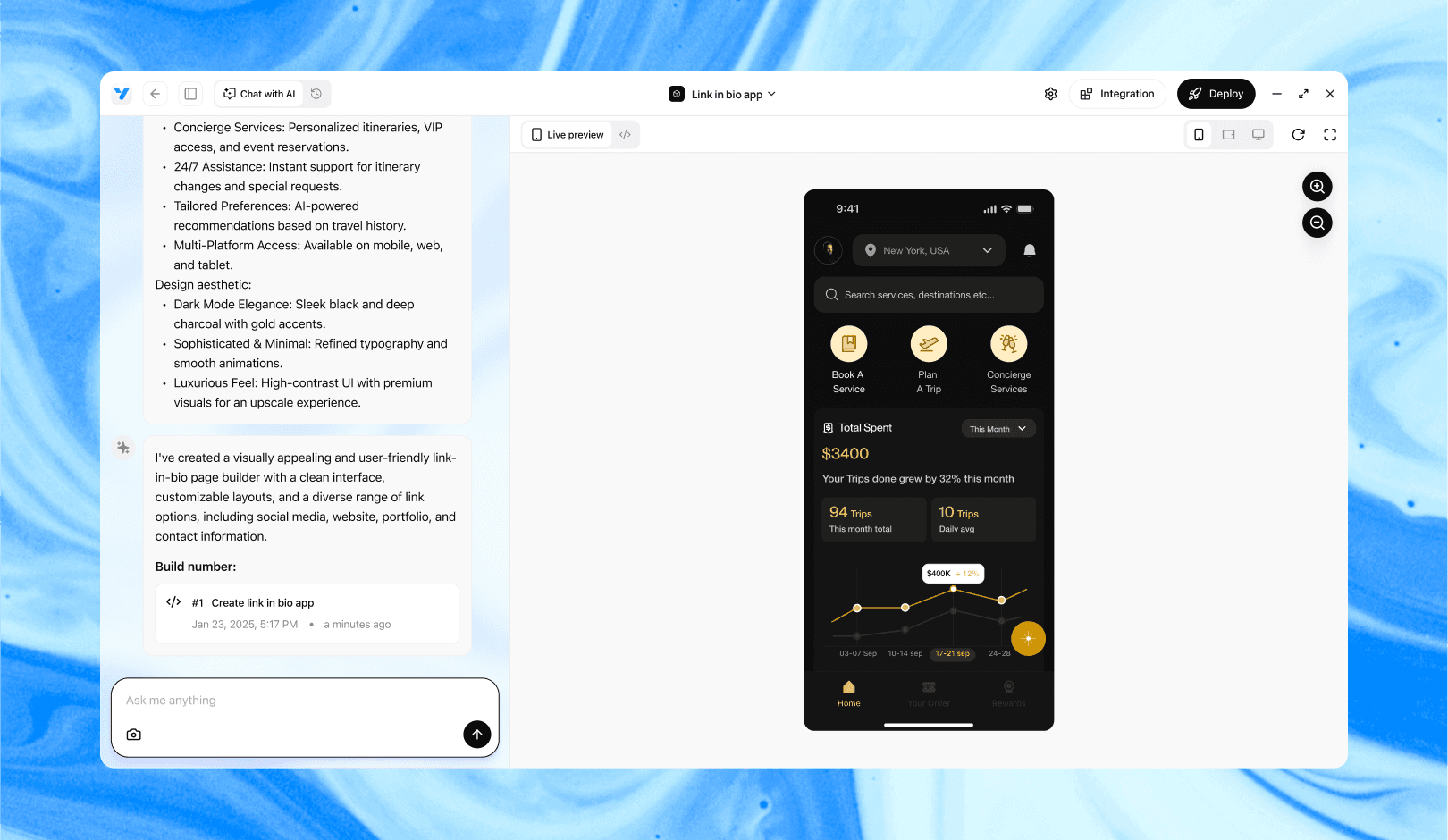
Vibe Studio, powered by Steve’s advanced AI agents, is a revolutionary no-code, conversational platform that empowers users to quickly and efficiently create full-stack Flutter applications integrated seamlessly with Firebase backend services. Ideal for solo founders, startups, and agile engineering teams, Vibe Studio allows users to visually manage and deploy Flutter apps, greatly accelerating the development process. The intuitive conversational interface simplifies complex development tasks, making app creation accessible even for non-coders.
Conclusion
Implementing focus, exposure, and zoom in Flutter mobile development requires wiring camera controller capabilities to intuitive gesture handling and attentive lifecycle management. With normalized point mapping, constrained zoom interpolation, and graceful permission handling you can build a responsive custom camera experience. Start with the camera package, detect feature availability, and progressively enhance with native calls where necessary for device-specific capabilities.

Introduction
Building a custom camera experience in Flutter gives you fine-grained control over focus, exposure, and zoom beyond default camera UIs. This tutorial walks through essential steps to implement tap-to-focus, exposure adjustment, and smooth pinch-to-zoom on mobile using the camera package and platform capabilities. The focus is on practical, code-forward guidance for Flutter mobile development.
Preparing The Camera Controller
Start by initializing CameraController and selecting a CameraDescription. Use the camera package (camera) and request resolution and image format that fit your use case. For focus and exposure, you need access to camera control methods — many platforms expose points of interest as normalized coordinates (0..1).
Keep the controller lifecycle clean: initialize in initState, dispose in dispose, and handle paused/resumed app lifecycle events. Attach a listener to catch state changes and errors.
final controller = CameraController(selectedCamera, ResolutionPreset.high, enableAudio: false); await controller.initialize(); controller.addListener(() { if (controller.value.hasError) print(controller.value.errorDescription); });
Implementing Focus And Exposure
Tap-to-focus translates screen touch coordinates into camera sensor coordinates. Get the RenderBox of the preview to convert global positions to local ones, then normalize by width/height. Many camera plugins support setFocusPoint or setPointOfInterest; if not available, use platform channels to call native APIs.
When setting focus and exposure points: clamp normalized values to 0..1, and apply both focus and exposure when the camera supports it. Provide visual feedback (a centered crosshair that animates) and a timeout to return to continuous autofocus/exposure mode.
Edge cases: some devices only support either focus or exposure points; feature-detect before calling and fall back to center focus.
Adding Smooth Zoom Controls
Pinch-to-zoom should map gesture scale to the camera's zoom range. Query controller.value.zoomLevel (or min/maxZoom) and interpolate. Use a debounced update to avoid flooding the camera with requests and interpolate by small steps for a smooth feel.
Example pinch handler that clamps and applies zoom:
void onScaleUpdate(ScaleUpdateDetails d) { final newZoom = (baseZoom * d.scale).clamp(minZoom, maxZoom); controller.setZoomLevel(newZoom); }
Also offer UI controls: a slider or double-tap-to-reset. For cinematic feel, animate zoom changes with AnimationController if you want easing curves.
Handling Lifecycle And Permissions
Camera resources are scarce on mobile. Release and reinitialize the controller on app pause/resume and when switching cameras. Always request camera permission up front using permission_handler or platform dialogs and handle denied or permanently denied states with clear user messaging.
Performance tips: prefer lower resolution previews for high frame-rate scenarios, and run heavy image processing in native or isolates. Avoid rebuilding the preview widget on every camera value change — use listeners that call setState minimally and render overlays separately.
Putting It Together In UI
Compose a stack: CameraPreview at the bottom, visual overlays for focus/exposure indicators, and gesture detectors on top capturing taps, double taps, and scale gestures. Debounce calls to native methods, provide haptics on focus, and reflect the current zoom and exposure bias on small HUD elements.
Testing: verify on both Android and iOS devices because point-of-interest coordinate systems or available features can differ. Use real hardware for focus/exposure behavior validation.
Vibe Studio

Vibe Studio, powered by Steve’s advanced AI agents, is a revolutionary no-code, conversational platform that empowers users to quickly and efficiently create full-stack Flutter applications integrated seamlessly with Firebase backend services. Ideal for solo founders, startups, and agile engineering teams, Vibe Studio allows users to visually manage and deploy Flutter apps, greatly accelerating the development process. The intuitive conversational interface simplifies complex development tasks, making app creation accessible even for non-coders.
Conclusion
Implementing focus, exposure, and zoom in Flutter mobile development requires wiring camera controller capabilities to intuitive gesture handling and attentive lifecycle management. With normalized point mapping, constrained zoom interpolation, and graceful permission handling you can build a responsive custom camera experience. Start with the camera package, detect feature availability, and progressively enhance with native calls where necessary for device-specific capabilities.

Build Flutter Apps Faster with Vibe Studio
Vibe Studio is your AI-powered Flutter development companion. Skip boilerplate, build in real-time, and deploy without hassle. Start creating apps at lightning speed with zero setup.
Other Insights