Introduction
This tutorial shows how to convert a plain English description into a working Flutter CRUD app inside Vibe Studio. The goal is to demonstrate a repeatable workflow: prepare the environment, translate requirements into UI and data models, generate or scaffold code in Vibe Studio, implement in-memory CRUD logic, and iterate with live preview. Focus is on pragmatic steps for mobile development using Flutter, not on exhaustive UI polish.
Preparing Your Vibe Studio Environment
Start by opening Vibe Studio and creating a new Flutter project. Vibe Studio excels at taking developer prompts and producing scaffolded screens, but you must be explicit about structure and interactions. Prepare a one-paragraph plain-English description that lists entities and actions. Example: "A notes app with title and body fields; list view shows notes; can add, edit, delete; persistent later."
In Vibe Studio set the target platform to mobile (iOS/Android), enable the device preview, and open the code editor and state inspector panels. Keep the initial scope small: one entity, one list screen, one edit screen. This reduces friction when iterating and makes device preview fast.
Translating Plain English Into App Structure
Map each sentence in the description to UI screens and data operations. For the example notes app:
Entity: Note {id, title, body}
Screens: NotesListScreen, NoteEditScreen
Actions: create, read, update, delete (CRUD)
Write a prompt for Vibe Studio that includes this mapping and explicitly requests Flutter widgets (ListView, TextField, ElevatedButton) and an in-memory repository for early development. Example prompt: "Generate a Flutter app with a Note model, a list screen showing notes in a ListView with add and delete buttons, and an edit screen that saves changes to an in-memory list. Use stateful widgets and minimal routing."
Let Vibe Studio scaffold the screens and wire basic navigation. Review the generated code: confirm route names, widget types, and where the repository is placed. If Vibe Studio produces boilerplate you don’t want, edit it in the built-in editor.
Implementing CRUD With Flutter Widgets
Keep the first implementation local and synchronous to prioritize rapid feedback. Implement a simple in-memory repository and basic state management using setState. This keeps the code small and readable for mobile development and makes it easy to later replace with async persistence.
Example model and repository (simple and explicit):
class Note {
  final int id;
  String title;
  String body;

  Note(this.id, this.title, this.body);
}

class NoteRepo {
  final List<Note> _notes = [];
  List<Note> all() => List.unmodifiable(_notes);
  void add(Note n) => _notes.add(n);
  void update(int id, String title, String body) {
    final i = _notes.indexWhere((e) => e.id == id);
    if (i != -1) _notes[i].title = title; _notes[i].body = body;
  }
  void remove(int id) => _notes.removeWhere((e) => e.id == id);
}
Hook this repository into your list screen. Use setState to refresh the list after add/update/delete. For routing, pass the Note instance (or null for new) to the edit screen and return a result indicating whether a save occurred.
Example of calling Navigator.pop with a result from an edit screen:
ElevatedButton(onPressed: () {
  final note = Note(nextId, titleController.text, bodyController.text);
  Navigator.pop(context, note);
}, child: Text('Save'))
When the list screen receives the returned note, decide whether to add or update the repo and call setState to redraw.
Testing And Iteration
Use Vibe Studio's device preview to test flows quickly: add, edit, delete, and verify UI states. Watch the state inspector to confirm your repository contents and widget rebuilds. Iterate on UI affordances (confirmation dialogs for delete, validation for empty title) and move pieces into separate widgets as complexity grows.
When the app behavior stabilizes, refactor the in-memory repo behind an interface so you can later swap in persistent storage (sqflite, hive, or a backend). Replace setState with a state-management solution (Provider, Riverpod, Bloc) only when you need shared state or complex business logic.
Focus on three practical checks before closing the session: 1) navigation returns explicit results, 2) list updates correctly after repository changes, and 3) UI handles empty states gracefully.
Vibe Studio
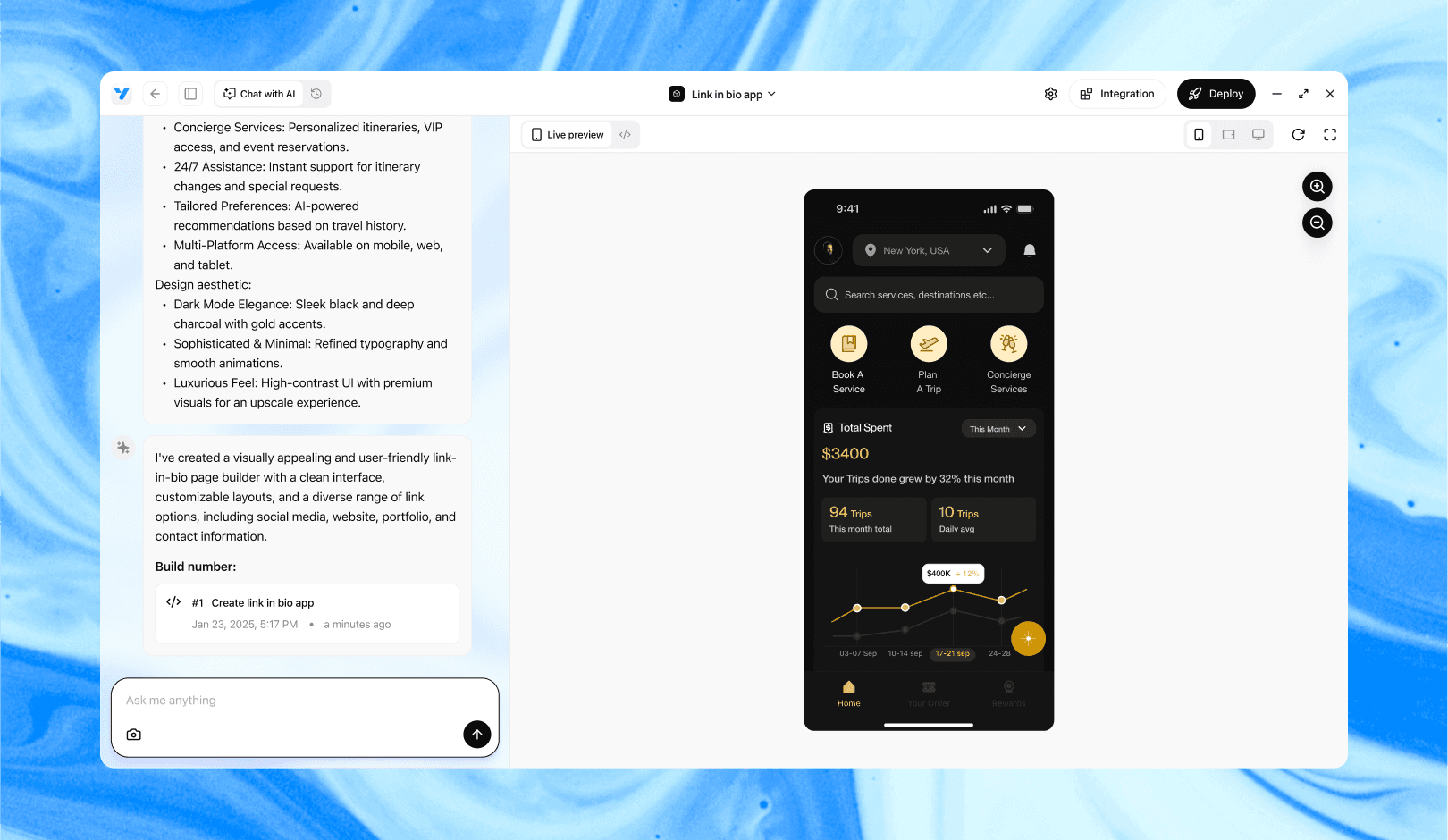
Vibe Studio, powered by Steve’s advanced AI agents, is a revolutionary no-code, conversational platform that empowers users to quickly and efficiently create full-stack Flutter applications integrated seamlessly with Firebase backend services. Ideal for solo founders, startups, and agile engineering teams, Vibe Studio allows users to visually manage and deploy Flutter apps, greatly accelerating the development process. The intuitive conversational interface simplifies complex development tasks, making app creation accessible even for non-coders.
Conclusion
Vibe Studio accelerates converting plain English requirements into a Flutter mobile development prototype. Start with a concise description, scaffold screens, implement a minimal in-memory CRUD layer, and iterate using live preview. Keep the first pass simple: stateful widgets and setState for fast feedback, then refactor toward persistence and structured state management as requirements grow. This workflow produces working prototypes quickly and makes later engineering decisions clearer.