Architecting Feature Modules With Clean Boundaries And APIs
Jan 23, 2026


Summary
Summary
Summary
Summary
Build Flutter feature modules as vertical slices with minimal public APIs, interface-based dependencies, centralized wiring, and contract tests. Expose only factory entry points and service interfaces, register implementations in the app composition root, and use versioning/adapters for migrations to maintain backward compatibility.
Key insights:
Key insights:
Key insights:
Key insights:
Principles Of Module Boundaries: Treat features as vertical slices, limit public surfaces, and enforce boundaries via package or explicit exports.
Designing Stable Public APIs: Expose small, additive factory functions and interfaces; avoid leaking internals and favor backward-compatible additions.
Dependency Management And Wiring: Register implementations in a composition root; inject abstractions to decouple modules and enhance testability.
Testing And Migration Strategies: Rely on unit, widget, and contract tests; use adapters and feature flags for incremental migrations.
Module Versioning And Evolution: Version APIs with new factories or adapters, deprecate gradually, and automate compatibility checks in CI.
Introduction
In Flutter mobile development, growing apps become fragile when features are interwoven. Architecting feature modules with clean boundaries and explicit APIs keeps teams productive, reduces regression risk, and enables independent shipping. This tutorial gives concrete principles, folder layout guidance, API patterns, dependency wiring snippets, and testing strategies for robust feature modules.
Principles Of Module Boundaries
Treat a feature module as a vertical slice: encapsulate UI, domain logic, and data access behind a small, versioned public API. Boundaries should be enforced by package boundaries where possible (separate Dart package or Flutter module) or by carefully structured directories with clear export files (lib/src internal, lib/public.dart exported).
Key principles:
Single Responsibility: a module owns one feature or cohesive set of screens.
Explicit Ownership: one team or owner per module to avoid accidental cross-cutting changes.
Minimal Public Surface: export only what other modules need (views, controllers, interfaces).
Inversion Of Control: depend on abstractions, not concrete implementations.
Suggested layout (single-package approach):
lib/
public.dart // exposes the module API
src/
ui/
domain/
data/
internal_utils/
Use package:feature_x/public.dart to import the module, never internal paths.
Designing Stable Public APIs
Design the public API as a small set of types and factory functions. Avoid exposing internal widgets, repositories, or low-level details. Provide composable building blocks: a Router/Entry widget, service interfaces, and configuration objects.
Example public API surface (in lib/public.dart):
// lib/public.dart abstract class FeatureXService { Future<String> fetchValue(); } Widget createFeatureX({required FeatureXService service}) { return _FeatureXEntry(service: service); }
This keeps the module usable without revealing internals and lets callers inject mocks or alternative implementations. When adding API members, prefer additive changes. If you must change signatures, introduce a new factory or versioned API rather than breaking callers.
Dependency Management And Wiring
Prefer composition over global singletons. Provide well-defined registration functions per module so the app's composition root wires dependencies. This keeps modules testable and pluggable.
Use an interface-based approach; register implementations at the top-level app. Example wiring function:
// module registration in app composition root void registerFeatureX(GetIt di) { di.registerLazySingleton<FeatureXService>(() => HttpFeatureXService()); di.registerFactory<Widget>(() => createFeatureX(service: di())); }
If you use Provider, Riverpod, or GetIt, keep registration in one place. Avoid importing module internals into other modules—only import the public entry. For cross-cutting concerns (analytics, auth), depend on small interfaces defined in a shared core package to avoid circular dependencies.
Handle optional integrations with well-documented configuration points. For example, accept an optional delegate interface in the module API that callers can implement when they need tighter integration.
Testing And Migration Strategies
Test each module in isolation. Create three test levels:
Unit tests for domain and data logic behind the public API.
Widget tests for entry widgets using injected test doubles.
Contract/integration tests to verify the public API meets expectations.
Contract tests are crucial: when a module evolves, run the consumer test suite against the new module implementation in CI to detect API changes. Maintain a changelog and API compatibility notes. For breaking changes, use a deprecation period: keep older factories around and route new behavior through new named constructors or versioned factory functions.
For large migrations (shared state or navigation changes), use feature flags or adapter layers. An adapter can translate new API calls to old behavior until all consumers migrate.
Vibe Studio
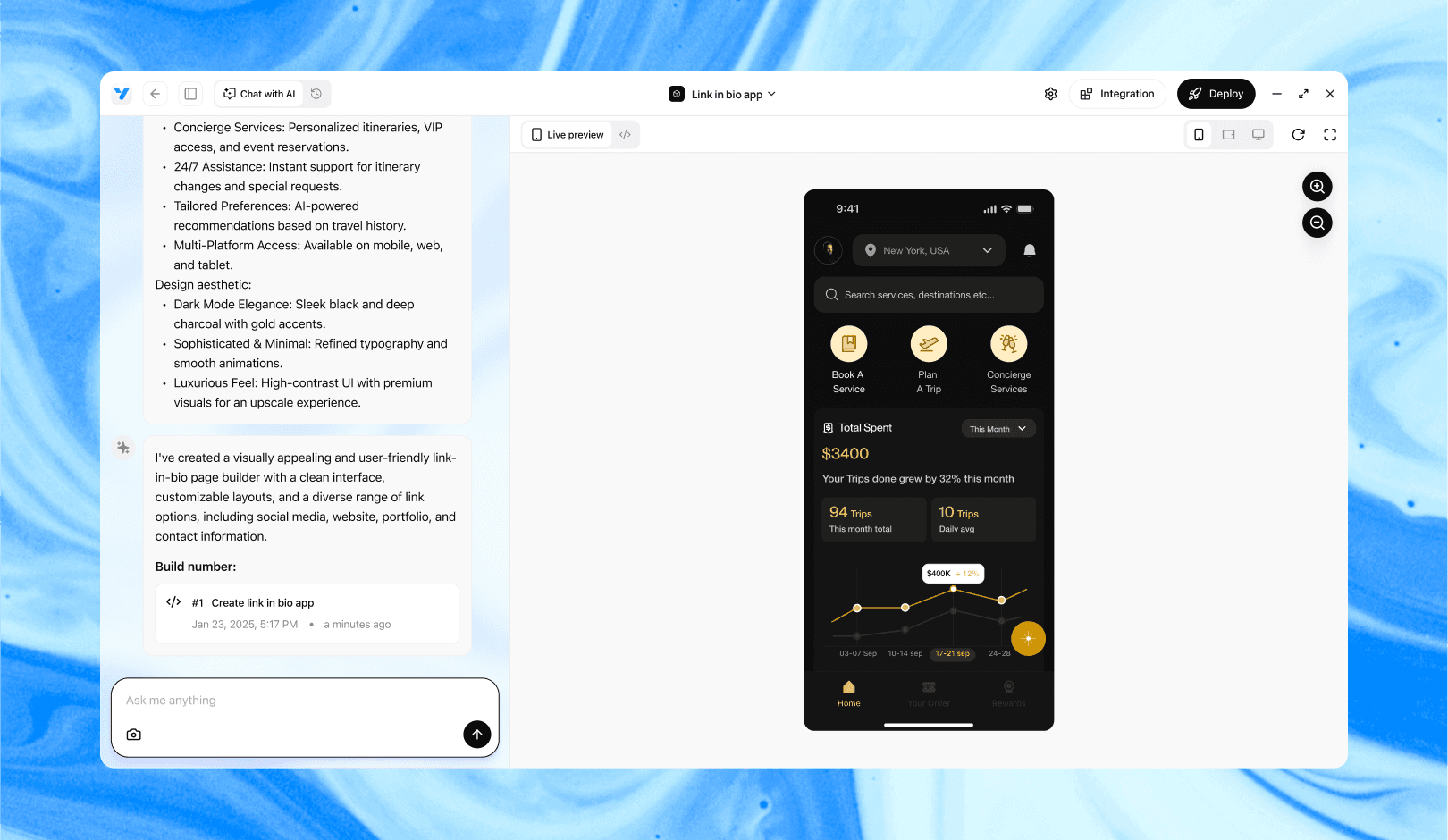
Vibe Studio, powered by Steve’s advanced AI agents, is a revolutionary no-code, conversational platform that empowers users to quickly and efficiently create full-stack Flutter applications integrated seamlessly with Firebase backend services. Ideal for solo founders, startups, and agile engineering teams, Vibe Studio allows users to visually manage and deploy Flutter apps, greatly accelerating the development process. The intuitive conversational interface simplifies complex development tasks, making app creation accessible even for non-coders.
Conclusion
Architecting feature modules in Flutter for mobile development requires deliberate choices: limit public surfaces, invert dependencies, provide clear wiring functions, and test contracts. Encapsulate internals behind package or directory boundaries, accept only abstractions at module edges, and keep registration centralized in the composition root. These practices let teams iterate quickly, ship features independently, and reduce regressions as the app scales.

Introduction
In Flutter mobile development, growing apps become fragile when features are interwoven. Architecting feature modules with clean boundaries and explicit APIs keeps teams productive, reduces regression risk, and enables independent shipping. This tutorial gives concrete principles, folder layout guidance, API patterns, dependency wiring snippets, and testing strategies for robust feature modules.
Principles Of Module Boundaries
Treat a feature module as a vertical slice: encapsulate UI, domain logic, and data access behind a small, versioned public API. Boundaries should be enforced by package boundaries where possible (separate Dart package or Flutter module) or by carefully structured directories with clear export files (lib/src internal, lib/public.dart exported).
Key principles:
Single Responsibility: a module owns one feature or cohesive set of screens.
Explicit Ownership: one team or owner per module to avoid accidental cross-cutting changes.
Minimal Public Surface: export only what other modules need (views, controllers, interfaces).
Inversion Of Control: depend on abstractions, not concrete implementations.
Suggested layout (single-package approach):
lib/
public.dart // exposes the module API
src/
ui/
domain/
data/
internal_utils/
Use package:feature_x/public.dart to import the module, never internal paths.
Designing Stable Public APIs
Design the public API as a small set of types and factory functions. Avoid exposing internal widgets, repositories, or low-level details. Provide composable building blocks: a Router/Entry widget, service interfaces, and configuration objects.
Example public API surface (in lib/public.dart):
// lib/public.dart abstract class FeatureXService { Future<String> fetchValue(); } Widget createFeatureX({required FeatureXService service}) { return _FeatureXEntry(service: service); }
This keeps the module usable without revealing internals and lets callers inject mocks or alternative implementations. When adding API members, prefer additive changes. If you must change signatures, introduce a new factory or versioned API rather than breaking callers.
Dependency Management And Wiring
Prefer composition over global singletons. Provide well-defined registration functions per module so the app's composition root wires dependencies. This keeps modules testable and pluggable.
Use an interface-based approach; register implementations at the top-level app. Example wiring function:
// module registration in app composition root void registerFeatureX(GetIt di) { di.registerLazySingleton<FeatureXService>(() => HttpFeatureXService()); di.registerFactory<Widget>(() => createFeatureX(service: di())); }
If you use Provider, Riverpod, or GetIt, keep registration in one place. Avoid importing module internals into other modules—only import the public entry. For cross-cutting concerns (analytics, auth), depend on small interfaces defined in a shared core package to avoid circular dependencies.
Handle optional integrations with well-documented configuration points. For example, accept an optional delegate interface in the module API that callers can implement when they need tighter integration.
Testing And Migration Strategies
Test each module in isolation. Create three test levels:
Unit tests for domain and data logic behind the public API.
Widget tests for entry widgets using injected test doubles.
Contract/integration tests to verify the public API meets expectations.
Contract tests are crucial: when a module evolves, run the consumer test suite against the new module implementation in CI to detect API changes. Maintain a changelog and API compatibility notes. For breaking changes, use a deprecation period: keep older factories around and route new behavior through new named constructors or versioned factory functions.
For large migrations (shared state or navigation changes), use feature flags or adapter layers. An adapter can translate new API calls to old behavior until all consumers migrate.
Vibe Studio

Vibe Studio, powered by Steve’s advanced AI agents, is a revolutionary no-code, conversational platform that empowers users to quickly and efficiently create full-stack Flutter applications integrated seamlessly with Firebase backend services. Ideal for solo founders, startups, and agile engineering teams, Vibe Studio allows users to visually manage and deploy Flutter apps, greatly accelerating the development process. The intuitive conversational interface simplifies complex development tasks, making app creation accessible even for non-coders.
Conclusion
Architecting feature modules in Flutter for mobile development requires deliberate choices: limit public surfaces, invert dependencies, provide clear wiring functions, and test contracts. Encapsulate internals behind package or directory boundaries, accept only abstractions at module edges, and keep registration centralized in the composition root. These practices let teams iterate quickly, ship features independently, and reduce regressions as the app scales.
Build Flutter Apps Faster with Vibe Studio
Vibe Studio is your AI-powered Flutter development companion. Skip boilerplate, build in real-time, and deploy without hassle. Start creating apps at lightning speed with zero setup.
Other Insights