Animating Page Transitions in Flutter for Premium UX
Dec 5, 2025


Summary
Summary
Summary
Summary
This tutorial explains how to design and implement premium page transitions in Flutter for mobile development. It covers strategy selection, custom PageRouteBuilder animations, coordinating nested animations and Hero shared elements, and essential performance and accessibility practices to maintain 60fps and respect reduced-motion settings.
Key insights:
Key insights:
Key insights:
Key insights:
Choosing A Transition Strategy: Prefer platform defaults for native feel; pick custom routes when you need branded motion or coordinated animations.
Implementing PageRouteBuilder: Compose FadeTransition, SlideTransition, and CurvedAnimation for reusable, short (200–350ms) navigation animations.
Nested Animations And Shared Elements: Use Hero for continuity and coordinate child animations with the parent route's animation for smooth layered motion.
Performance And Accessibility Considerations: Animate transforms/opacity, isolate repaint-heavy subtrees, and respect reduced-motion accessibility settings.
Testing And Consistency: Profile on low-end devices, maintain consistent timing/curves across the app, and validate behavior with screen readers.
Choosing A Transition Strategy
Start by deciding the user expectation and platform conventions. MaterialPageRoute and CupertinoPageRoute give platform-consistent default transitions; prefer them when you want native feel with minimal work. Use explicit transitions when:
You need a branded motion language (e.g., subtle parallax or scale).
Screens have overlapping content where continuity is important (shared elements).
You want to coordinate multiple animations across layers.
Strategy checklist:
Use default routes for simple pushes and pops.
Use PageRouteBuilder for custom entry/exit animations.
Use Hero for shared-element continuity.
Favor implicit widgets (AnimatedContainer, AnimatedOpacity) for small, local motion.
Implementing PageRouteBuilder
PageRouteBuilder lets you define entrance and exit animations with Animation values. Keep transition builders short and composition-friendly: separate translation, scale, and fade as composable transforms. Below is a compact slide+fade route that you can reuse across the app.
Navigator.of(context).push(PageRouteBuilder(
pageBuilder: (_, __, ___) => DetailsPage(),
transitionsBuilder: (_, anim, __, child) => FadeTransition(
opacity: anim,
child: SlideTransition(
position: Tween(begin: Offset(0.1, 0), end: Offset.zero).animate(anim),
child: child,
),
),
));Best practices:
Use Curves.easeInOut or Curves.easeOut for natural motion.
Make animations short (200–350ms) for navigational transitions.
Don’t animate large layers unnecessarily—prefer animating lightweight wrappers.
Nested Animations And Shared Elements
Complex transitions often need coordinated animations: a page-level entrance plus widget-level motion. Use Hero for shared elements—Hero automatically morphs a widget from one route to the next, preserving visual continuity. Keep Hero tags stable and lightweight.
For nested animations, coordinate with AnimationController or implicit widgets:
Trigger child animations from the parent route’s Animation via AnimatedBuilder or SlideTransition chained to the parent animation.
Use AnimatedSwitcher for swapping widgets with cross-fades or scale transitions when content changes within the same route.
Example: wrap the shared thumbnail in a Hero and let the destination animate additional details using an animation controller started in initState. This avoids jarring jumps and provides perceivable continuity.
Performance And Accessibility Considerations
Animations should be performant and accessible in mobile development. Follow these constraints:
Maintain 60fps: animate transforms (translate, scale, rotate) and opacity; avoid animating LayoutBuilder-driven size changes when possible.
Layering: use RepaintBoundary for heavy subtrees to isolate repaint cost.
Reduced Motion: respect platform accessibility settings. Query MediaQuery.of(context).disableAnimations or an accessibility setting, and skip or shorten transitions accordingly.
Testing: profile with Flutter’s Performance overlay and test on low-end devices/emulators to ensure no jank.
Accessibility tips:
Ensure transitions don’t hide important content; allow users to reach content quickly.
Provide clear focus behavior for screen readers after a transition completes.
Vibe Studio
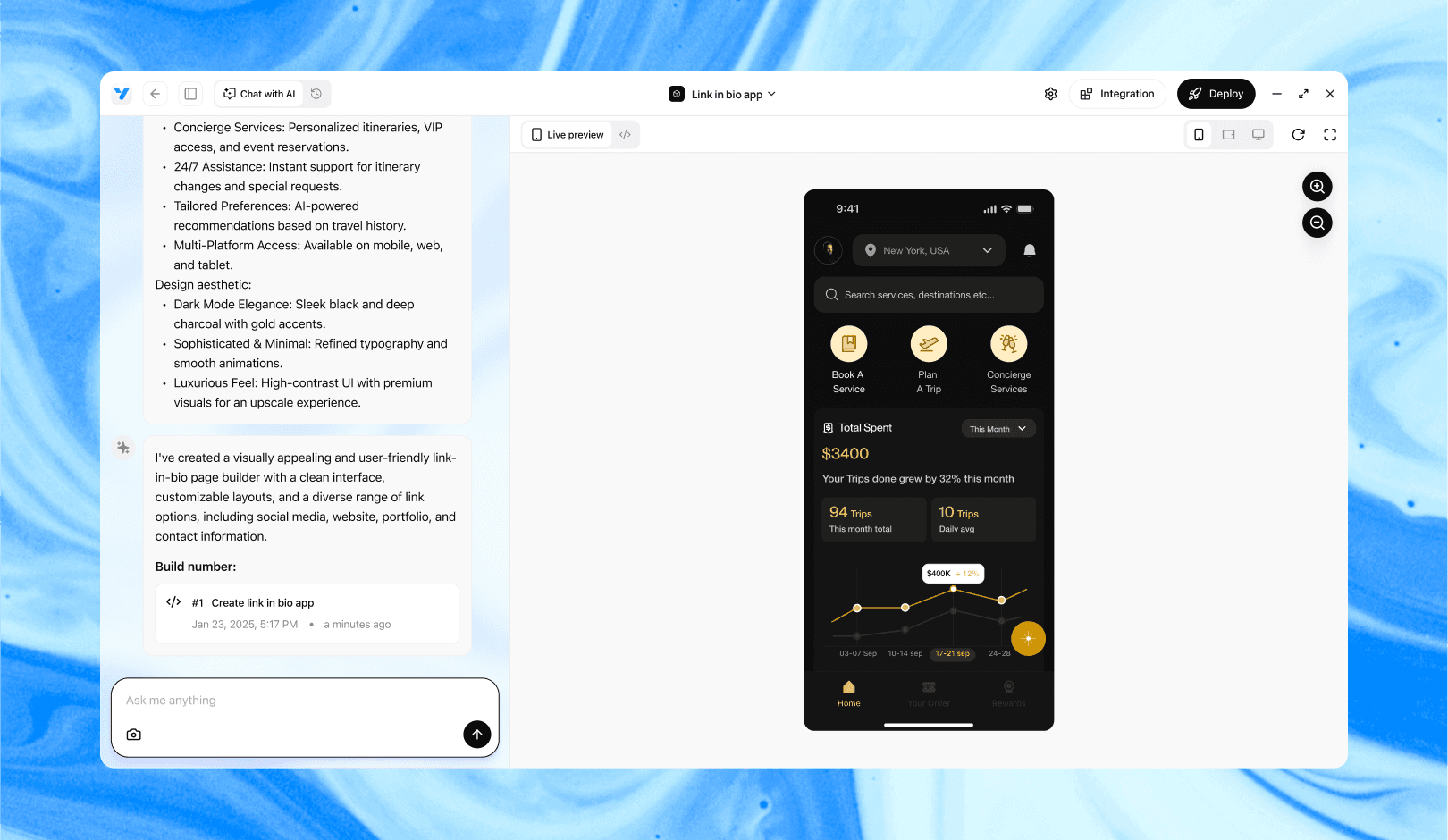
Vibe Studio, powered by Steve’s advanced AI agents, is a revolutionary no-code, conversational platform that empowers users to quickly and efficiently create full-stack Flutter applications integrated seamlessly with Firebase backend services. Ideal for solo founders, startups, and agile engineering teams, Vibe Studio allows users to visually manage and deploy Flutter apps, greatly accelerating the development process. The intuitive conversational interface simplifies complex development tasks, making app creation accessible even for non-coders.
Conclusion
Well-crafted page transitions in Flutter improve clarity and perceived quality of your app. Use platform defaults where appropriate, PageRouteBuilder for custom motion, Hero for shared elements, and keep performance and accessibility at the core of every animation decision. With composable transition patterns and short, intentional motion you’ll deliver a premium UX in mobile development.

Choosing A Transition Strategy
Start by deciding the user expectation and platform conventions. MaterialPageRoute and CupertinoPageRoute give platform-consistent default transitions; prefer them when you want native feel with minimal work. Use explicit transitions when:
You need a branded motion language (e.g., subtle parallax or scale).
Screens have overlapping content where continuity is important (shared elements).
You want to coordinate multiple animations across layers.
Strategy checklist:
Use default routes for simple pushes and pops.
Use PageRouteBuilder for custom entry/exit animations.
Use Hero for shared-element continuity.
Favor implicit widgets (AnimatedContainer, AnimatedOpacity) for small, local motion.
Implementing PageRouteBuilder
PageRouteBuilder lets you define entrance and exit animations with Animation values. Keep transition builders short and composition-friendly: separate translation, scale, and fade as composable transforms. Below is a compact slide+fade route that you can reuse across the app.
Navigator.of(context).push(PageRouteBuilder(
pageBuilder: (_, __, ___) => DetailsPage(),
transitionsBuilder: (_, anim, __, child) => FadeTransition(
opacity: anim,
child: SlideTransition(
position: Tween(begin: Offset(0.1, 0), end: Offset.zero).animate(anim),
child: child,
),
),
));Best practices:
Use Curves.easeInOut or Curves.easeOut for natural motion.
Make animations short (200–350ms) for navigational transitions.
Don’t animate large layers unnecessarily—prefer animating lightweight wrappers.
Nested Animations And Shared Elements
Complex transitions often need coordinated animations: a page-level entrance plus widget-level motion. Use Hero for shared elements—Hero automatically morphs a widget from one route to the next, preserving visual continuity. Keep Hero tags stable and lightweight.
For nested animations, coordinate with AnimationController or implicit widgets:
Trigger child animations from the parent route’s Animation via AnimatedBuilder or SlideTransition chained to the parent animation.
Use AnimatedSwitcher for swapping widgets with cross-fades or scale transitions when content changes within the same route.
Example: wrap the shared thumbnail in a Hero and let the destination animate additional details using an animation controller started in initState. This avoids jarring jumps and provides perceivable continuity.
Performance And Accessibility Considerations
Animations should be performant and accessible in mobile development. Follow these constraints:
Maintain 60fps: animate transforms (translate, scale, rotate) and opacity; avoid animating LayoutBuilder-driven size changes when possible.
Layering: use RepaintBoundary for heavy subtrees to isolate repaint cost.
Reduced Motion: respect platform accessibility settings. Query MediaQuery.of(context).disableAnimations or an accessibility setting, and skip or shorten transitions accordingly.
Testing: profile with Flutter’s Performance overlay and test on low-end devices/emulators to ensure no jank.
Accessibility tips:
Ensure transitions don’t hide important content; allow users to reach content quickly.
Provide clear focus behavior for screen readers after a transition completes.
Vibe Studio

Vibe Studio, powered by Steve’s advanced AI agents, is a revolutionary no-code, conversational platform that empowers users to quickly and efficiently create full-stack Flutter applications integrated seamlessly with Firebase backend services. Ideal for solo founders, startups, and agile engineering teams, Vibe Studio allows users to visually manage and deploy Flutter apps, greatly accelerating the development process. The intuitive conversational interface simplifies complex development tasks, making app creation accessible even for non-coders.
Conclusion
Well-crafted page transitions in Flutter improve clarity and perceived quality of your app. Use platform defaults where appropriate, PageRouteBuilder for custom motion, Hero for shared elements, and keep performance and accessibility at the core of every animation decision. With composable transition patterns and short, intentional motion you’ll deliver a premium UX in mobile development.
Build Flutter Apps Faster with Vibe Studio
Vibe Studio is your AI-powered Flutter development companion. Skip boilerplate, build in real-time, and deploy without hassle. Start creating apps at lightning speed with zero setup.