Advanced Text Rendering With RichText TextSpan And Inline Widgets
Jan 22, 2026


Summary
Summary
Summary
Summary
This tutorial explains advanced text rendering in Flutter using RichText, TextSpan, and WidgetSpan. It covers when to choose RichText, composing styled and interactive spans, embedding inline widgets, and best practices for performance and accessibility. Includes code patterns for tap handlers, WidgetSpan usage, and lifecycle considerations for GestureRecognizers.
Key insights:
Key insights:
Key insights:
Key insights:
When To Use RichText: Choose RichText for mixed styles, inline widgets, or interactive text when a single Text widget is insufficient.
Styling And Spans: Nest TextSpan objects and reuse a base TextStyle; dispose GestureRecognizers created for interactive spans to avoid leaks.
Embedding Inline Widgets: Use WidgetSpan for icons and badges inline; constrain size and align to the baseline to preserve typography.
Performance And Accessibility: Minimize rebuilds of TextSpan trees, add Semantics where RichText lacks them, and test with varying font scales.
Text Selection And Semantics: Use SelectableText.rich for selectable content, but verify platform behavior for embedded widgets and provide semantic labels.
Introduction
Flutter's RichText widget and TextSpan hierarchy unlock precise control over inline typography beyond what a single Text widget provides. For advanced mobile development, RichText enables nested styling, tap handlers, inline widgets, and custom painting. This article focuses on practical patterns: when to choose RichText, how to compose TextSpan trees, embedding WidgetSpan for inline controls, and performance and accessibility considerations.
When To Use RichText
Prefer RichText when you need multiple styles, interactive spans, or embedded widgets within one paragraph. Text and SelectableText are simpler and should be used for most straightforward labels because they handle locale, line breaks, and ellipsizing with default semantics. RichText gives you raw control: it receives a TextSpan tree, a TextAlign, and a TextDirection, and it lays out via TextPainter under the hood. That control is necessary when different words need different fonts, colors, gesture recognizers, or when you want icons and chips inline with text.
Use cases: mixed font weights and colors in one paragraph, inline tappable links, badges inside sentences, or custom baselines for icons. Be explicit about textDirection and locale when the surrounding context might not provide them.
Styling And Spans
TextSpan is immutable and can nest children TextSpan objects. Define a base TextStyle and override only properties that change on children to keep code maintainable. For interactive spans, attach a GestureRecognizer (for example, TapGestureRecognizer) to a TextSpan; remember to dispose recognizers held in a StatefulWidget to avoid leaks.
Example pattern for styled spans and a tap handler:
TextSpan( style: TextStyle(fontSize: 16, color: Colors.black87), children: [ TextSpan(text: 'This is '), TextSpan(text: 'bold', style: TextStyle(fontWeight: FontWeight.bold)), TextSpan(text: ' text with a '), TextSpan( text: 'link', style: TextStyle(color: Colors.blue), recognizer: TapGestureRecognizer()..onTap = () => print('link tapped'), ), ], )
Keep recognizers as fields in a State class so you can call dispose() on them; creating ephemeral recognizers inline without disposal can leak native resources.
Embedding Inline Widgets
WidgetSpan is the tool to place widgets inline. It participates in the text layout and aligns to the text baseline by default if you set alignment and baseline. Use WidgetSpan for icons, avatars, badges, or small buttons inside a paragraph. Mind the widget size: large widgets can change line height unexpectedly. To keep a consistent line-height, wrap the inline widget in a SizedBox and align it with the text baseline.
Example embedding an icon and a badge inline:
RichText( text: TextSpan( style: TextStyle(fontSize: 16, color: Colors.black), children: [ TextSpan(text: 'Status: '), WidgetSpan( child: Icon(Icons.check_circle, size: 16, color: Colors.green), alignment: PlaceholderAlignment.aboveBaseline, ), TextSpan(text: ' Active'), ], ), )
Note: SelectableText.rich can be used when selection is required; however, embedding interactive widgets inside selectable text has platform-dependent behavior.
Performance And Accessibility
RichText bypasses some higher-level conveniences. For performance, avoid rebuilding the whole TextSpan tree if only style of a child changes—use const TextSpan where possible, and split content into smaller widgets to limit rebuild scope. TextPainter is the underlying engine; you rarely need it, but it can be used for precise measurement and hit-testing in custom render objects.
Accessibility: RichText does not automatically create semantic nodes for each TextSpan. If your text includes actionable or descriptive segments (links, icon labels), add semantics explicitly with Semantics widgets or split content into semantic-aware widgets. For tappable spans, ensure their tap targets are large enough and expose a tooltip or semantic label for screen readers.
Testing: Verify layout at different font scales and screen sizes. Use the accessibility tools to confirm semantic traversal order and label clarity.
Vibe Studio
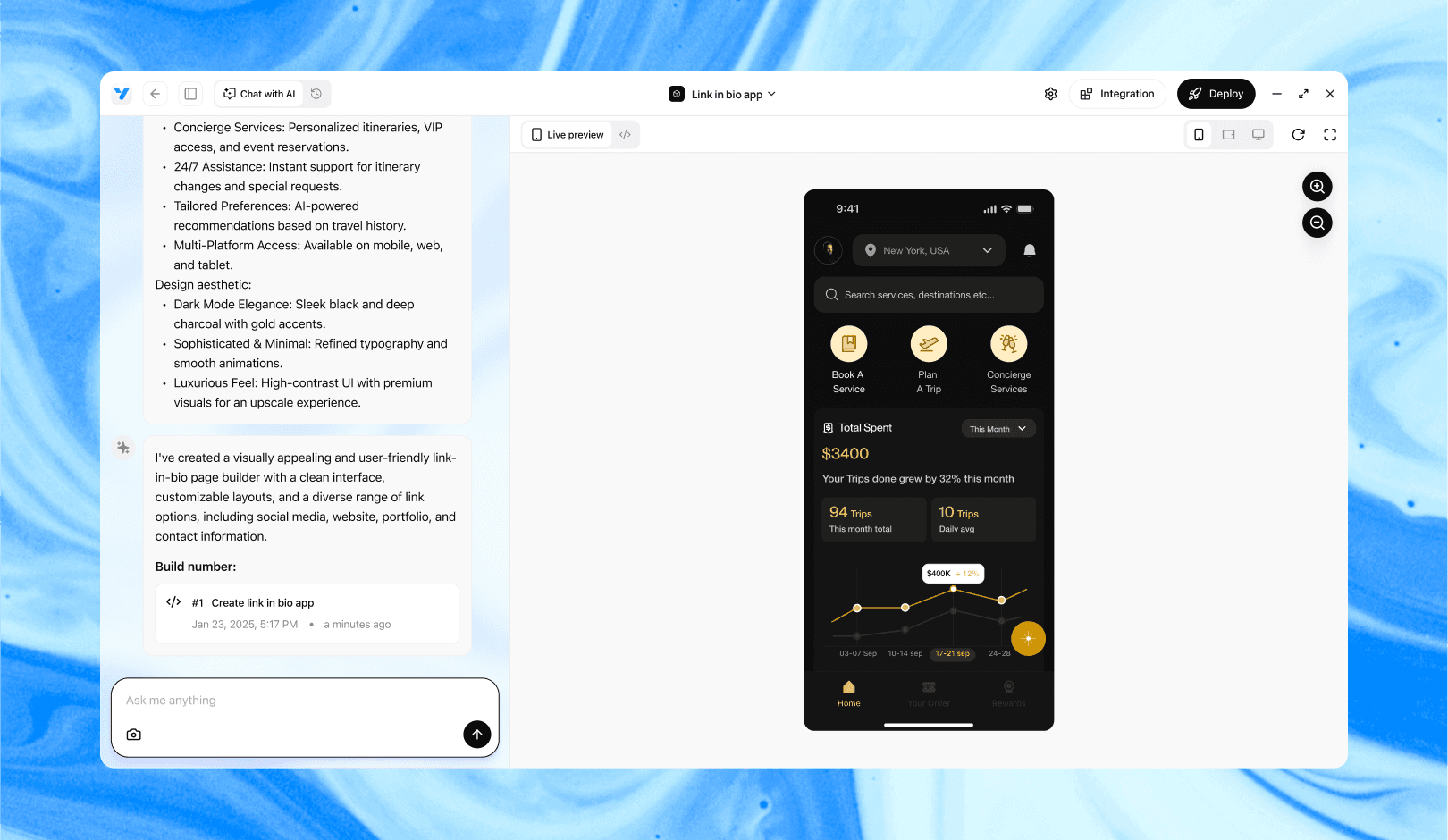
Vibe Studio, powered by Steve’s advanced AI agents, is a revolutionary no-code, conversational platform that empowers users to quickly and efficiently create full-stack Flutter applications integrated seamlessly with Firebase backend services. Ideal for solo founders, startups, and agile engineering teams, Vibe Studio allows users to visually manage and deploy Flutter apps, greatly accelerating the development process. The intuitive conversational interface simplifies complex development tasks, making app creation accessible even for non-coders.
Conclusion
RichText with TextSpan and WidgetSpan gives Flutter developers precise, composable control over inline text rendering necessary for advanced mobile development. Use it when you need mixed styling, inline widgets, or custom interactions. Manage GestureRecognizers lifecycle, constrain inline widgets to preserve line height, and proactively add semantics. When used judiciously, this API produces expressive, accessible, and performant typographic UIs.

Introduction
Flutter's RichText widget and TextSpan hierarchy unlock precise control over inline typography beyond what a single Text widget provides. For advanced mobile development, RichText enables nested styling, tap handlers, inline widgets, and custom painting. This article focuses on practical patterns: when to choose RichText, how to compose TextSpan trees, embedding WidgetSpan for inline controls, and performance and accessibility considerations.
When To Use RichText
Prefer RichText when you need multiple styles, interactive spans, or embedded widgets within one paragraph. Text and SelectableText are simpler and should be used for most straightforward labels because they handle locale, line breaks, and ellipsizing with default semantics. RichText gives you raw control: it receives a TextSpan tree, a TextAlign, and a TextDirection, and it lays out via TextPainter under the hood. That control is necessary when different words need different fonts, colors, gesture recognizers, or when you want icons and chips inline with text.
Use cases: mixed font weights and colors in one paragraph, inline tappable links, badges inside sentences, or custom baselines for icons. Be explicit about textDirection and locale when the surrounding context might not provide them.
Styling And Spans
TextSpan is immutable and can nest children TextSpan objects. Define a base TextStyle and override only properties that change on children to keep code maintainable. For interactive spans, attach a GestureRecognizer (for example, TapGestureRecognizer) to a TextSpan; remember to dispose recognizers held in a StatefulWidget to avoid leaks.
Example pattern for styled spans and a tap handler:
TextSpan( style: TextStyle(fontSize: 16, color: Colors.black87), children: [ TextSpan(text: 'This is '), TextSpan(text: 'bold', style: TextStyle(fontWeight: FontWeight.bold)), TextSpan(text: ' text with a '), TextSpan( text: 'link', style: TextStyle(color: Colors.blue), recognizer: TapGestureRecognizer()..onTap = () => print('link tapped'), ), ], )
Keep recognizers as fields in a State class so you can call dispose() on them; creating ephemeral recognizers inline without disposal can leak native resources.
Embedding Inline Widgets
WidgetSpan is the tool to place widgets inline. It participates in the text layout and aligns to the text baseline by default if you set alignment and baseline. Use WidgetSpan for icons, avatars, badges, or small buttons inside a paragraph. Mind the widget size: large widgets can change line height unexpectedly. To keep a consistent line-height, wrap the inline widget in a SizedBox and align it with the text baseline.
Example embedding an icon and a badge inline:
RichText( text: TextSpan( style: TextStyle(fontSize: 16, color: Colors.black), children: [ TextSpan(text: 'Status: '), WidgetSpan( child: Icon(Icons.check_circle, size: 16, color: Colors.green), alignment: PlaceholderAlignment.aboveBaseline, ), TextSpan(text: ' Active'), ], ), )
Note: SelectableText.rich can be used when selection is required; however, embedding interactive widgets inside selectable text has platform-dependent behavior.
Performance And Accessibility
RichText bypasses some higher-level conveniences. For performance, avoid rebuilding the whole TextSpan tree if only style of a child changes—use const TextSpan where possible, and split content into smaller widgets to limit rebuild scope. TextPainter is the underlying engine; you rarely need it, but it can be used for precise measurement and hit-testing in custom render objects.
Accessibility: RichText does not automatically create semantic nodes for each TextSpan. If your text includes actionable or descriptive segments (links, icon labels), add semantics explicitly with Semantics widgets or split content into semantic-aware widgets. For tappable spans, ensure their tap targets are large enough and expose a tooltip or semantic label for screen readers.
Testing: Verify layout at different font scales and screen sizes. Use the accessibility tools to confirm semantic traversal order and label clarity.
Vibe Studio

Vibe Studio, powered by Steve’s advanced AI agents, is a revolutionary no-code, conversational platform that empowers users to quickly and efficiently create full-stack Flutter applications integrated seamlessly with Firebase backend services. Ideal for solo founders, startups, and agile engineering teams, Vibe Studio allows users to visually manage and deploy Flutter apps, greatly accelerating the development process. The intuitive conversational interface simplifies complex development tasks, making app creation accessible even for non-coders.
Conclusion
RichText with TextSpan and WidgetSpan gives Flutter developers precise, composable control over inline text rendering necessary for advanced mobile development. Use it when you need mixed styling, inline widgets, or custom interactions. Manage GestureRecognizers lifecycle, constrain inline widgets to preserve line height, and proactively add semantics. When used judiciously, this API produces expressive, accessible, and performant typographic UIs.
Build Flutter Apps Faster with Vibe Studio
Vibe Studio is your AI-powered Flutter development companion. Skip boilerplate, build in real-time, and deploy without hassle. Start creating apps at lightning speed with zero setup.
Other Insights