Advanced JSON Parsing With Isolates For Huge Payloads
Summary
Summary

Move heavy JSON decoding to Dart isolates to keep Flutter UIs responsive. Prefer NDJSON or paginated APIs, stream data in moderate chunks, parse incrementally in an isolate via ports or compute, and persist results in batches to control memory and improve throughput.

Move heavy JSON decoding to Dart isolates to keep Flutter UIs responsive. Prefer NDJSON or paginated APIs, stream data in moderate chunks, parse incrementally in an isolate via ports or compute, and persist results in batches to control memory and improve throughput.

Key insights:
Key insights:
  • Why Use Isolates For Parsing: Offload CPU-bound decoding to avoid UI jank and control memory live-time on mobile.

  • Design Patterns For Chunked Parsing: NDJSON and chunked boundary detection are practical patterns for streaming huge payloads.

  • Code Example: Spawn And Parse: Use Isolate.spawn with SendPort/ReceivePort for streaming parse and per-chunk replies to the main isolate.

  • Integrating With Flutter UI: Use compute for single blobs, manual isolates for streaming, and batch persistence to avoid large in-memory lists.

  • Performance And Memory Considerations: Tune chunk sizes, reuse isolates when possible, and profile heap to minimize GC and peak memory.

Introduction

Parsing very large JSON payloads on mobile can kill responsiveness and spike memory in Flutter apps. Isolates let you move CPU-heavy JSON decoding off the UI thread so the app stays responsive. This article demonstrates practical patterns—including NDJSON and chunked streaming—to parse huge payloads safely for flutter mobile development.

Why Use Isolates For Parsing

The Dart VM is single-threaded for each isolate. Heavy json.decode calls block the main isolate and cause frame drops. For mobile development, responsiveness and memory control are top priorities. Use isolates to:

  • Offload CPU-bound decode operations.

  • Keep the main isolate free for rendering and user input.

  • Control memory lifetime of parsed objects (free the isolate to release memory).

Design Patterns For Chunked Parsing

Large payloads often arrive as a stream (file, network response, or socket). Two practical patterns work well:

1) NDJSON (newline-delimited JSON): If you can have the producer send one JSON object per line, you can stream-parse line-by-line in an isolate. Each line is a complete JSON object so incremental decoding is trivial and memory-friendly.

2) Chunked Accumulator with Boundary Detection: If NDJSON isn’t available, implement a boundary detector in the isolate that accumulates incoming UTF-8 chunks and extracts complete objects using a simple bracket/balance scanner for arrays/objects. This requires careful handling of strings and escapes; for reliability prefer a streaming JSON parser library if available.

Tip: When you control the API, prefer NDJSON or paginated JSON over huge monolithic arrays.

Code Example: Spawn And Parse

Below is a concise isolate entry that expects NDJSON: each incoming string chunk may contain multiple lines; the isolate decodes each line independently. This example shows message-passing using Isolate.spawn and ports.

import 'dart:isolate';
import 'dart:convert';

void ndjsonIsolate(SendPort mainPort) async {
  final port = ReceivePort();
  mainPort.send(port.sendPort);
  await for (final msg in port) {
    if (msg == 'done') break;
    final String chunk = msg[0] as String;
    final SendPort reply = msg[1] as SendPort;
    final results = <Map>[];
    for (final line in const LineSplitter().convert(chunk)) {

This isolates parsing cost and returns parsed objects per chunk. The main isolate controls flow, pushing chunks that fit memory constraints.

Integrating With Flutter UI

Two integration options:

  • compute(): For a single large blob that you can hand off and receive a complete result, Flutter’s compute convenience is simple: compute(parseFunction, payload). That’s good for one-off tasks but not for streaming.

  • Manual Isolate + Ports: For streaming, use Isolate.spawn as above. Create a flow control loop that reads from network/file in moderately sized buffers (e.g., 64–256 KB), sends each buffer to the parsing isolate, awaits the reply, and then processes or persists parsed objects incrementally (e.g., insert into a local database). Persisting incrementally avoids building huge in-memory lists.

Practical considerations:

  • Choose chunk size that balances throughput and memory (start 64 KB and tune).

  • If you use JSON arrays, prefer parsing element-by-element on the isolate, not decoding the whole array at once.

  • Close and kill isolates when done to release memory.

  • Offload heavy post-processing (e.g., object mapping) to the isolate as well, to keep the main isolate lightweight.

Performance And Memory Considerations

  • Avoid collecting all parsed objects in the main isolate. Stream or batch-save them to local storage (sqflite, hive) as they arrive.

  • For very large payloads, NDJSON plus streaming is the simplest and most robust strategy.

  • Measure GC and isolate heap sizes in profiling tools; spawn fewer isolates and reuse them for multiple payloads if startup cost matters.

  • If using network response bodies, prefer streaming APIs (HttpClient.openUrl, request.finalize()) so you can feed chunks straight to the isolate.

Conclusion

For flutter mobile development that must handle huge JSON payloads, isolates are essential for keeping the UI responsive. Prefer NDJSON or paginated APIs, stream data in moderate chunks, parse inside an isolate using message passing, and persist incrementally. These steps minimize memory pressure and deliver smooth user experiences even when data volumes are large.

Vibe Studio
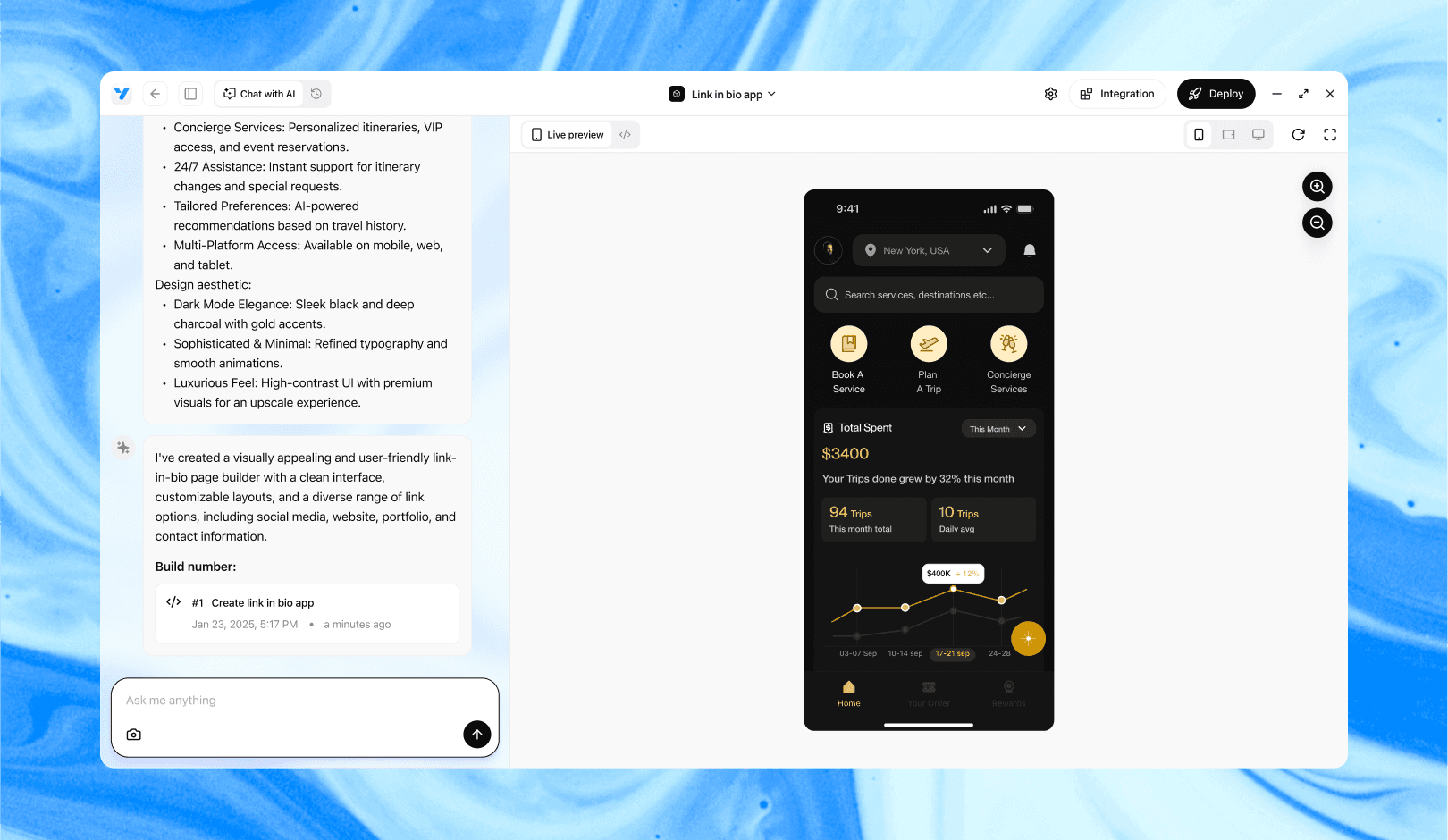
Vibe Studio, powered by Steve’s advanced AI agents, is a revolutionary no-code, conversational platform that empowers users to quickly and efficiently create full-stack Flutter applications integrated seamlessly with Firebase backend services. Ideal for solo founders, startups, and agile engineering teams, Vibe Studio allows users to visually manage and deploy Flutter apps, greatly accelerating the development process. The intuitive conversational interface simplifies complex development tasks, making app creation accessible even for non-coders.


Introduction

Parsing very large JSON payloads on mobile can kill responsiveness and spike memory in Flutter apps. Isolates let you move CPU-heavy JSON decoding off the UI thread so the app stays responsive. This article demonstrates practical patterns—including NDJSON and chunked streaming—to parse huge payloads safely for flutter mobile development.

Why Use Isolates For Parsing

The Dart VM is single-threaded for each isolate. Heavy json.decode calls block the main isolate and cause frame drops. For mobile development, responsiveness and memory control are top priorities. Use isolates to:

  • Offload CPU-bound decode operations.

  • Keep the main isolate free for rendering and user input.

  • Control memory lifetime of parsed objects (free the isolate to release memory).

Design Patterns For Chunked Parsing

Large payloads often arrive as a stream (file, network response, or socket). Two practical patterns work well:

1) NDJSON (newline-delimited JSON): If you can have the producer send one JSON object per line, you can stream-parse line-by-line in an isolate. Each line is a complete JSON object so incremental decoding is trivial and memory-friendly.

2) Chunked Accumulator with Boundary Detection: If NDJSON isn’t available, implement a boundary detector in the isolate that accumulates incoming UTF-8 chunks and extracts complete objects using a simple bracket/balance scanner for arrays/objects. This requires careful handling of strings and escapes; for reliability prefer a streaming JSON parser library if available.

Tip: When you control the API, prefer NDJSON or paginated JSON over huge monolithic arrays.

Code Example: Spawn And Parse

Below is a concise isolate entry that expects NDJSON: each incoming string chunk may contain multiple lines; the isolate decodes each line independently. This example shows message-passing using Isolate.spawn and ports.

import 'dart:isolate';
import 'dart:convert';

void ndjsonIsolate(SendPort mainPort) async {
  final port = ReceivePort();
  mainPort.send(port.sendPort);
  await for (final msg in port) {
    if (msg == 'done') break;
    final String chunk = msg[0] as String;
    final SendPort reply = msg[1] as SendPort;
    final results = <Map>[];
    for (final line in const LineSplitter().convert(chunk)) {

This isolates parsing cost and returns parsed objects per chunk. The main isolate controls flow, pushing chunks that fit memory constraints.

Integrating With Flutter UI

Two integration options:

  • compute(): For a single large blob that you can hand off and receive a complete result, Flutter’s compute convenience is simple: compute(parseFunction, payload). That’s good for one-off tasks but not for streaming.

  • Manual Isolate + Ports: For streaming, use Isolate.spawn as above. Create a flow control loop that reads from network/file in moderately sized buffers (e.g., 64–256 KB), sends each buffer to the parsing isolate, awaits the reply, and then processes or persists parsed objects incrementally (e.g., insert into a local database). Persisting incrementally avoids building huge in-memory lists.

Practical considerations:

  • Choose chunk size that balances throughput and memory (start 64 KB and tune).

  • If you use JSON arrays, prefer parsing element-by-element on the isolate, not decoding the whole array at once.

  • Close and kill isolates when done to release memory.

  • Offload heavy post-processing (e.g., object mapping) to the isolate as well, to keep the main isolate lightweight.

Performance And Memory Considerations

  • Avoid collecting all parsed objects in the main isolate. Stream or batch-save them to local storage (sqflite, hive) as they arrive.

  • For very large payloads, NDJSON plus streaming is the simplest and most robust strategy.

  • Measure GC and isolate heap sizes in profiling tools; spawn fewer isolates and reuse them for multiple payloads if startup cost matters.

  • If using network response bodies, prefer streaming APIs (HttpClient.openUrl, request.finalize()) so you can feed chunks straight to the isolate.

Conclusion

For flutter mobile development that must handle huge JSON payloads, isolates are essential for keeping the UI responsive. Prefer NDJSON or paginated APIs, stream data in moderate chunks, parse inside an isolate using message passing, and persist incrementally. These steps minimize memory pressure and deliver smooth user experiences even when data volumes are large.

Vibe Studio

Vibe Studio, powered by Steve’s advanced AI agents, is a revolutionary no-code, conversational platform that empowers users to quickly and efficiently create full-stack Flutter applications integrated seamlessly with Firebase backend services. Ideal for solo founders, startups, and agile engineering teams, Vibe Studio allows users to visually manage and deploy Flutter apps, greatly accelerating the development process. The intuitive conversational interface simplifies complex development tasks, making app creation accessible even for non-coders.

Build Flutter Apps Faster with Vibe Studio

Vibe Studio is your AI-powered Flutter development companion. Skip boilerplate, build in real-time, and deploy without hassle. Start creating apps at lightning speed with zero setup.

Other Insights

Join a growing community of builders today

Join a growing community of builders today

Join a growing community of builders today

Join a growing community of builders today

Join a growing community of builders today

28-07 Jackson Ave

Walturn

New York NY 11101 United States

© Steve • All Rights Reserved 2025

28-07 Jackson Ave

Walturn

New York NY 11101 United States

© Steve • All Rights Reserved 2025

28-07 Jackson Ave

Walturn

New York NY 11101 United States

© Steve • All Rights Reserved 2025

28-07 Jackson Ave

Walturn

New York NY 11101 United States

© Steve • All Rights Reserved 2025

28-07 Jackson Ave

Walturn

New York NY 11101 United States

© Steve • All Rights Reserved 2025

28-07 Jackson Ave

Walturn

New York NY 11101 United States

© Steve • All Rights Reserved 2025