Adding Voice Commands to Flutter Apps Using Speech Recognition
Dec 1, 2025


Summary
Summary
Summary
Summary
This tutorial guides Flutter mobile development teams through adding voice commands using the speech_to_text plugin. It covers choosing a plugin, setting Android/iOS permissions, initializing and handling speech in Dart, mapping transcripts to deterministic commands, and UX improvements like live feedback and error handling for robust, battery-conscious implementations.
Key insights:
Key insights:
Key insights:
Key insights:
Choosing A Speech Recognition Plugin: speech_to_text is a pragmatic cross-platform choice for on-device recognition without server infrastructure.
Setting Up Permissions And Platform Configuration: Android needs RECORD_AUDIO and runtime permission; iOS requires microphone and speech usage strings in Info.plist.
Implementing Speech Recognition In Flutter: Initialize SpeechToText, check availability, then start/stop listening and handle onResult for transcripts.
Handling Errors And Improving UX: Show permission prompts, provide live partial results and a recording indicator, and debounce results to avoid duplicate actions.
Testing And Performance: Test across accents and noise; avoid long continuous listening to save battery and isolate parsing logic for unit tests.
Introduction
Voice commands are a natural way to improve accessibility and speed in mobile apps. In Flutter-based mobile development, adding speech recognition lets users control UI, enter text, and trigger actions hands-free. This guide shows a pragmatic approach: choose a plugin, configure platform permissions, implement listening and command parsing, and polish UX. Code snippets demonstrate core integration with the speech_to_text package — a stable, cross-platform option for Flutter.
Choosing A Speech Recognition Plugin
For Flutter, pick a plugin that is actively maintained, supports both Android and iOS, and exposes real-time partial results. speech_to_text meets those criteria: it wraps platform speech APIs, provides locale selection, and supports continuous listening. Add it to pubspec.yaml:
Use speech_to_text when you need on-device or platform-based recognition without a server.
Consider cloud-based services (Google Speech-to-Text, Azure, etc.) only if you require high accuracy, custom language models, or offline limitations.
Setting Up Permissions And Platform Configuration
Android
Add RECORD_AUDIO permission to android/app/src/main/AndroidManifest.xml:
<uses-permission android:name="android.permission.RECORD_AUDIO" />
For Android 10+ consider requesting runtime permissions using the permission_handler package or native platform channels.
iOS
Add microphone and speech recognition descriptions to ios/Runner/Info.plist:
<key>NSMicrophoneUsageDescription</key> <string>App needs microphone access for voice commands.</string> <key>NSSpeechRecognitionUsageDescription</key> <string>App uses speech recognition to process voice commands.</string>
On iOS, enable Siri and Speech Recognition capabilities if you require continuous recognition in the background (note Apple restrictions).
Implementing Speech Recognition In Flutter
Initialize speech_to_text and start listening. Keep initialization in initState and dispose properly to avoid leaks. The core flow:
Instantiate SpeechToText.
Check availability and request permission via initialize().
Start listening with startListening(), handle onResult and onSoundLevelChange for visual feedback.
Stop or cancel listening with stop() or cancel().
Example initialization and start/stop handlers:
import 'package:speech_to_text/speech_to_text.dart' as stt; final stt.SpeechToText _speech = stt.SpeechToText(); Future<void> initSpeech() async { bool available = await _speech.initialize(onStatus: (s)=>print(s), onError: (e)=>print(e)); if (!available) throw 'Speech recognition unavailable'; } void startListening() => _speech.listen(onResult: (r){ setState(()=>_text=r.recognizedWords); });
Parsing Commands
Once you receive recognizedWords, map those strings to actions. Simple approaches work well:
Exact-match commands: compare lowercase text against a set of phrases ("open settings", "send message").
Intent keywords: search for tokens ("open", "settings") and route accordingly.
Use regex for parameter extraction ("call John", extract the contact name).
Keep command parsing deterministic and fast; avoid heavy NLP on-device unless you add a cloud NLP step.
Handling Errors And Improving UX
Errors to anticipate: permission denied, recognition unavailable, noisy input, and partial or incorrect transcripts. Mitigate with clear UI and fallbacks:
Show microphone permission prompts and a one-tap link to app settings when denied.
Display live partial results and confidence scores if provided, so users can correct mistakes.
Debounce recognition results to avoid firing duplicate actions on repeated interim results.
Provide visual feedback: waveform, sound level meters, and a recording indicator.
Performance and battery
Continuous listening can be power-hungry. Use short listening sessions and only enable continuous mode when required (e.g., in a dedicated voice-control screen). For always-on scenarios, prefer platform-specific solutions or cloud streaming designed for long-duration recognition.
Testing
Test with different accents, background noise, and device models. Validate behavior when the app is backgrounded, and ensure iOS and Android permission flows behave as expected. Unit-test command parsing logic independently from speech APIs by injecting sample transcript strings.
Vibe Studio
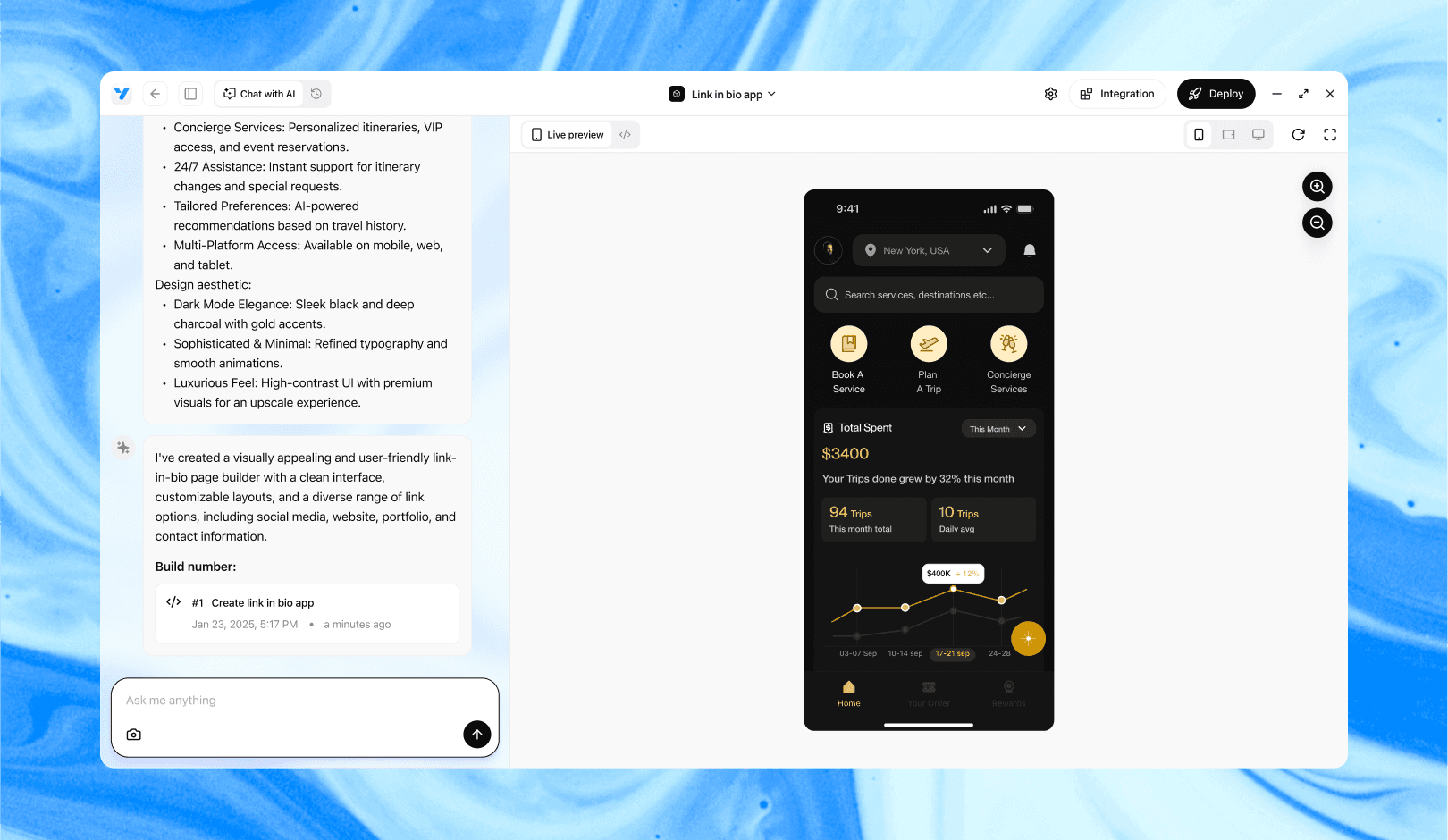
Vibe Studio, powered by Steve’s advanced AI agents, is a revolutionary no-code, conversational platform that empowers users to quickly and efficiently create full-stack Flutter applications integrated seamlessly with Firebase backend services. Ideal for solo founders, startups, and agile engineering teams, Vibe Studio allows users to visually manage and deploy Flutter apps, greatly accelerating the development process. The intuitive conversational interface simplifies complex development tasks, making app creation accessible even for non-coders.
Conclusion
Adding voice commands to Flutter apps accelerates workflows and improves accessibility. Using a plugin like speech_to_text, plus correct platform permissions, straightforward start/stop handlers, and deterministic command parsing, you can implement reliable voice control without complex infrastructure. Focus on clear UX around permissions and live feedback, keep sessions short to conserve battery, and test across accents and noise conditions to ensure robust mobile development outcomes.

Introduction
Voice commands are a natural way to improve accessibility and speed in mobile apps. In Flutter-based mobile development, adding speech recognition lets users control UI, enter text, and trigger actions hands-free. This guide shows a pragmatic approach: choose a plugin, configure platform permissions, implement listening and command parsing, and polish UX. Code snippets demonstrate core integration with the speech_to_text package — a stable, cross-platform option for Flutter.
Choosing A Speech Recognition Plugin
For Flutter, pick a plugin that is actively maintained, supports both Android and iOS, and exposes real-time partial results. speech_to_text meets those criteria: it wraps platform speech APIs, provides locale selection, and supports continuous listening. Add it to pubspec.yaml:
Use speech_to_text when you need on-device or platform-based recognition without a server.
Consider cloud-based services (Google Speech-to-Text, Azure, etc.) only if you require high accuracy, custom language models, or offline limitations.
Setting Up Permissions And Platform Configuration
Android
Add RECORD_AUDIO permission to android/app/src/main/AndroidManifest.xml:
<uses-permission android:name="android.permission.RECORD_AUDIO" />
For Android 10+ consider requesting runtime permissions using the permission_handler package or native platform channels.
iOS
Add microphone and speech recognition descriptions to ios/Runner/Info.plist:
<key>NSMicrophoneUsageDescription</key> <string>App needs microphone access for voice commands.</string> <key>NSSpeechRecognitionUsageDescription</key> <string>App uses speech recognition to process voice commands.</string>
On iOS, enable Siri and Speech Recognition capabilities if you require continuous recognition in the background (note Apple restrictions).
Implementing Speech Recognition In Flutter
Initialize speech_to_text and start listening. Keep initialization in initState and dispose properly to avoid leaks. The core flow:
Instantiate SpeechToText.
Check availability and request permission via initialize().
Start listening with startListening(), handle onResult and onSoundLevelChange for visual feedback.
Stop or cancel listening with stop() or cancel().
Example initialization and start/stop handlers:
import 'package:speech_to_text/speech_to_text.dart' as stt; final stt.SpeechToText _speech = stt.SpeechToText(); Future<void> initSpeech() async { bool available = await _speech.initialize(onStatus: (s)=>print(s), onError: (e)=>print(e)); if (!available) throw 'Speech recognition unavailable'; } void startListening() => _speech.listen(onResult: (r){ setState(()=>_text=r.recognizedWords); });
Parsing Commands
Once you receive recognizedWords, map those strings to actions. Simple approaches work well:
Exact-match commands: compare lowercase text against a set of phrases ("open settings", "send message").
Intent keywords: search for tokens ("open", "settings") and route accordingly.
Use regex for parameter extraction ("call John", extract the contact name).
Keep command parsing deterministic and fast; avoid heavy NLP on-device unless you add a cloud NLP step.
Handling Errors And Improving UX
Errors to anticipate: permission denied, recognition unavailable, noisy input, and partial or incorrect transcripts. Mitigate with clear UI and fallbacks:
Show microphone permission prompts and a one-tap link to app settings when denied.
Display live partial results and confidence scores if provided, so users can correct mistakes.
Debounce recognition results to avoid firing duplicate actions on repeated interim results.
Provide visual feedback: waveform, sound level meters, and a recording indicator.
Performance and battery
Continuous listening can be power-hungry. Use short listening sessions and only enable continuous mode when required (e.g., in a dedicated voice-control screen). For always-on scenarios, prefer platform-specific solutions or cloud streaming designed for long-duration recognition.
Testing
Test with different accents, background noise, and device models. Validate behavior when the app is backgrounded, and ensure iOS and Android permission flows behave as expected. Unit-test command parsing logic independently from speech APIs by injecting sample transcript strings.
Vibe Studio

Vibe Studio, powered by Steve’s advanced AI agents, is a revolutionary no-code, conversational platform that empowers users to quickly and efficiently create full-stack Flutter applications integrated seamlessly with Firebase backend services. Ideal for solo founders, startups, and agile engineering teams, Vibe Studio allows users to visually manage and deploy Flutter apps, greatly accelerating the development process. The intuitive conversational interface simplifies complex development tasks, making app creation accessible even for non-coders.
Conclusion
Adding voice commands to Flutter apps accelerates workflows and improves accessibility. Using a plugin like speech_to_text, plus correct platform permissions, straightforward start/stop handlers, and deterministic command parsing, you can implement reliable voice control without complex infrastructure. Focus on clear UX around permissions and live feedback, keep sessions short to conserve battery, and test across accents and noise conditions to ensure robust mobile development outcomes.
Build Flutter Apps Faster with Vibe Studio
Vibe Studio is your AI-powered Flutter development companion. Skip boilerplate, build in real-time, and deploy without hassle. Start creating apps at lightning speed with zero setup.